Laura West and Rob Hawley attended the Sports Merchandise and Licensing Show 2016 in Chelsea this November.
In a sector worth billions, Mathys & Squire understand the value of brand in the sporting industry. We work closely with our clients to protect their IP and maximise value from their investment. The trade mark team work closely with Chelsea Football Club to develop and protect its extensive portfolio. Obtaining protection is often just the first step in a long process of consistent monitoring and action, particularly for brands such as CHELSEA FC that attract a following, making them vulnerable to counterfeiting. We are required to react quickly to reported infringement of the Club’s trade marks to ensure that the company’s brand and reputation are protected. The rise of technology allows forgeries and counterfeit goods to look increasingly like the real thing. We can assist you in setting up strategic solutions for tackling these issues. Having trade marks registered and recorded is vital in this respect.
If you are interested in finding out more about the importance of IP to your business, and how you can maximise the value of your IP assets, please contact our trade mark team. For more information please click here, or take a look at our Counterfeiting and Licencing documents.
Food Matters Live is the only UK cross sector event that brings together retailers, providers, government and those working in nutrition. The Food & Beverage team at Mathys & Squire will be attending Food Matters Live, which takes place at ExCeL, London from 22 – 24 November.
We have particular expertise in Food Technology, and our dedicated Food & Beverage team has filed and prosecuted hundreds of patent applications in this highly innovative field. Our Attorneys are therefore well-placed to answer any food-related IP enquiries you may have, and will be exhibiting with our collaborators the Danish-UK Chamber of Commerce (DUCC). Make sure to visit us at Stand No. 225!
We are delighted to announce the promotion to the Partnership of James Pitchford, James Wilding, Monika Rai and Stephen Garner.
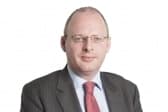 | Dr James Pitchford specialises in patent work in the physics, electronics, engineering and materials science sectors. James is experienced in opposition and appeal proceedings before the European Patent Office. James obtained an MA honours degree in natural sciences (physics and materials science) and a PhD in materials science, both from the University of Cambridge. |
 | Dr James Wilding practices in the areas of biochemistry, biotechnology and immunology, with a particular focus on therapeutic antibodies, cell-based therapies, vaccines and gene editing. He has extensive experience in handling oppositions and appeals at the European Patent Office and is considered to be an expert within the field of SPCs. |
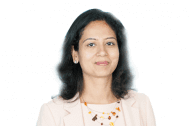 | Monika Rai has particular expertise in the areas of proteins and peptides, nucleic acid therapies, probiotics and diagnostics. She represents clients in both prosecution and opposition proceedings at the European Patent Office, and is also heavily involved in conducting and coordinating major IP due diligence projects, including those involving freedom to operate reviews and licensing agreements. She is qualified as a Solicitor (England & Wales) and holds a Higher Courts Litigation Certificate providing enhanced rights to conduct IP litigation in the UK courts. |
 | Dr Stephen Garner has a practice that extends from chemistry, pharmaceuticals and nutritionals, through to protein and antibody therapies. He works with a diverse range of clients, from universities and SMEs to multinational corporations, and is highly regarded for his expertise in tailoring to their business needs all areas of patenting from drafting and prosecution, to oppositions, SPCs and life cycle management. He manages large patent portfolios for international pharmaceutical companies and has significant experience in obtaining and defending European patents for blockbuster drugs. |
On 15th September we hosted an interesting and informative meeting in collaboration with Collider Startups.
To read more about the points and tips discussed in the meeting please click on the link below.
http://collider.io/startup-intellectual-property-tips/
We are delighted to have joined BioNow, an organisation support innovation and growth within the life sciences sector across the North East.
Mathys & Squire has always been proud to employ people of different nationalities, with many coming from countries within the EU. In light of recent events, and to ensure that we are positioned to be able to continue to handle European Union Trade Marks and Registered Community Designs even after Brexit, the firm is pleased to confirm the opening of offices in Paris and Munich.
The UK Intellectual Property Office (“UK IPO”) has accepted the UK trade mark for SHOULD’VE and SHOULDVE applied for by Specsavers B.V. (“Specsavers”) for optical goods and optician services.
The decision taken by the UK IPO to accept a contraction of a term commonly used in the English language is surprising. A registered trade mark gives the trade mark holder the right to prevent a subsequently-filed trade mark from being registered if it is likely that confusion would arise because it is identical and / or similar to that registered trade mark and relates to identical and / or similar goods or services to those for which the registered trade mark is protected.
If Specsavers successfully obtains a registration for SHOULD’VE and SHOULDVE it may be able to prevent competitors from using SHOULD’VE or SHOULDVE as a trade mark. For Specsavers to successfully prevent competitors from using a trade mark such as SHOULD’VE or SHOULDVE Specsavers would need to demonstrate that SHOULD’VE or SHOULDVE was used in a trade mark sense to indicate origin.
Our team of trade mark attorneys can recommend whether to pursue an application for registration of a trade mark and discuss with you the benefits and implications of enforcing the trade mark once it proceeds to registration. Please contact our trade mark attorneys to discuss your trade mark portfolio.
For the second year running, Denmark’s biotechnology sector has been awarded a top three ranking by Scientific American in their annual Worldview Report, which assesses countries worldwide according to their biotechnology innovation potential. This global ranking puts Denmark ahead of all its European contemporaries, who are left wondering what gives Denmark its competitive edge?
Predominantly focussed around the Greater Copenhagen area, Denmark’s life sciences sector employs more than 40,000 people. Many of these highly skilled employees are located in Meidcon Valley, home to almost 400 biotech and medtech companies. Combine this with generous public sector investment of around €5.6 billion as well as a drug trial application process characterised by speedy processing (~6 weeks) and a high approval rate (~95%), and all the factors for success are present .
Central to the strength of all R&D and biotechnology companies is a strong intellectual property portfolio. Not only are Danish biotechnology companies actively innovating, but they are also highly effective at recognising the value of their inventions. The World Economic Forum has ranked Denmark 8th in the world for the number of International Patent Applications (PCT Applications) filed (as a function of population) in its 2015-2016 global competitiveness analysis . Impressively, Denmark boasts 215.4 International Patent Applications filed per million of the population. When compared to the four largest European economies, Denmark’s prolific patent filing puts them ahead of the UK, France, and the Netherlands, second only to Germany, who lead by a slender margin (see Figure 1).
Owing to convergence of all of these factors, it is no surprise that medical products account for Denmark’s largest export category estimated to be worth approximately 17 billion Euros per annum. Denmark’s biotechnology industry thus continues to serve as a role model to other countries operating under the current economic challenges faced by the Eurozone. In the wake of Brexit, the UK would do well to follow Denmark’s lead.
We are delighted to announce that our clients, QUB and Green Lizard, have been nominated for the IChemE Global Awards 2016. The IChemE awards celebrate excellence, innovation and achievement in the chemical, biochemical and process industries.
Our clients are finalists in two categories; the Chemical Engineering Industry Project of the Year Award and the Food and Drink Award. Chris Hamer and Michael Stott have been involved with both projects from the very beginning, and have worked with the team to ensure that their innovative technologies are protected.
The winner will be announced on Thursday 3rd November in Manchester, UK.
Following the UK’s vote to the leave the European Union, Dani Kramer has discussed the potential impact of Brexit in the latest ‘Doing Business with Israel – Legal and Business Guide 2016’.
Dani has considered some of the main implications of the UK’s withdrawal from the EU on various intellectual property rights and systems, and has provided practical guidance on the impact this might have on Israeli businesses seeking to protect their IP in the UK and Europe.
To read more please click on the link below.
http://www.israeldesks.com/doing_business-with_Israel_2016/#11/z
For more information on this topic please contact Dani Kramer who heads up our Israel team.