Partner Rebecca Tew and Managing Associate Adam Gilbertson have been featured in World Intellectual Property Review, Business Insider (UK and Spain) and the Retail Times providing commentary on the rise in trainer patent applications by top-level sports brands.
Their commentary examines how growing attention to the sport, aided by local running communities and large-scale events, has encouraged investment in trainer innovation and increased IP protection, particularly by industry giants Nike and Adidas.
Read the extended press release below.
- Nike had 374 trainer patent applications published in the past year – nearly three times more than Adidas, its nearest competitor*
- Patent activity moves beyond traditional sportswear giants, with brands like On breaking into the top five filers
The number of trainer patent applications by the largest sportswear brands jumped to 791, up 31% from 601 in the previous year*, as companies race to develop new footwear technology, says intellectual property law firm Mathys & Squire.
Mathys & Squire says the rise in patent filings in this field reflects the growing investment in research and development of new technologies and innovations aimed at improving the performance of amateur and recreational runners, who are becoming increasingly competitive.
Specifically, the rise of communities like Strava and Parkrun, adoption of professional training methods, and the increased use of data and performance tracking technologies, has made amateur / recreational runners become more competitive than ever. Recreational runners are also more willing (and able) to take on demanding events, such as the London Marathon and Ultra-Trail du Mont-Blanc.
Sportswear companies are looking to capitalise on this by developing trainer technologies that will help amateur athletes run further, for longer. For example, leading trainer manufacturers are locked in a race to create near-weightless shoes for runners; solutions include injecting gases such as nitrogen into soles and eliminating laces altogether, with some designs pushing the total weight below the 100g threshold.
Adam Gilbertson, Managing Associate at Mathys & Squire, said: “We are also seeing footwear innovation become increasingly focused on comfort and motion support, as more people engage in running through communities and new trends that promote competition and performance monitoring. This is undoubtedly driving demand for technology that helps runners run faster and longer, and take on more demanding challenges like marathons with confidence.”
Nike is dominating the global trainer technology race, with 374 footwear patent applications published in 2025*, comfortably outpacing 18 other major competitors considered in this study (see graph below).
In fact, Nike had as many footwear technology patent applications published in 2025 as its five nearest competitors combined, which include Adidas, Sketchers, Asics, Puma and On. Nike’s long-time German rival, Adidas, increased its patent applications published by 88 in 2025, narrowing the gap but still trailing by a significant margin.
Among the patent applications by Nike is a “fluid movement controller” system embedded in a shoe’s sole, which enables users to adjust cushioning and support levels in real-time to adapt to running conditions and fatigue levels.
Other technologies aimed at improving runners’ performance for which patents are being pursued include:
- Shoe soles from On that return energy with every step. Flexible layers inside the sole stretch when you land and spring back as you push off.
- Adidas shoes that automatically shifts part of their sole sideways in response to foot pressure, to help keep the runner balanced.
- On’s running shoe midsole, which is designed to support runners by absorbing impact and smoothing uneven movement, helping running feel more stable and comfortable, even without perfect form.
- Adidas’ smart running shoes which have sensors that analyse movement and signals users to adjust their gait using vibrations or pressure cues.
- A running shoe that uses an internal air bladder with locking elements to adapt to the foot and then secure it in place, improving comfort and stability for long-distance runs.
Mathys & Squire says that while established footwear giants such as Nike, Adidas, Asics and Puma continue to innovate, data shows that newer rivals are developing their own technologies and investing more in patent protection. For example, over the past year, Swiss brand On had 49 patent applications published, breaking into the top 5 filers for the first time, while Lululemon had 11.
Rebecca Tew, Partner at Mathys & Squire, added that having invested in research and new technologies, footwear companies need to be wary of posting on social media too soon and ensure their intellectual property (IP) is protected via appropriate patent, design and/or trade mark filings. Otherwise, once displayed on social media, it may already be too late to seek patent protection for new technologies and innovations which might quickly be copied by competitors, making anti-counterfeiting particularly challenging.
The number of trainer patent applications rose 31% in the last year, with Nike leading the race
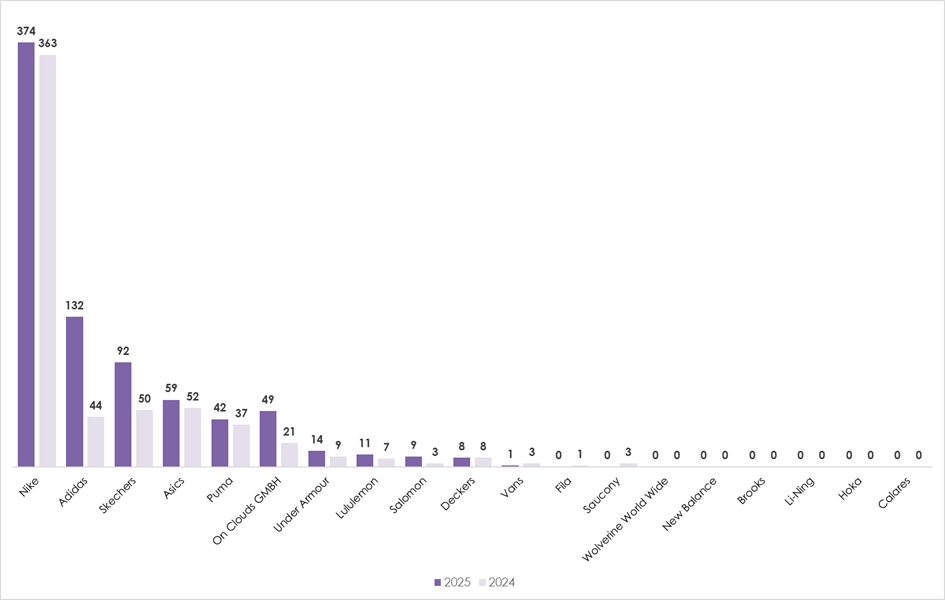
*Research conducted for calendar years 2025 and 2024 based on published patent applications.
In life sciences, the end goal of improving patient outcomes rarely changes. What has changed, quite dramatically, is the environment in which innovation must survive long enough to get there.
For early-stage companies in particular, the path from idea to impact is becoming harder to navigate. Capital is tighter, IPO windows have narrowed, and policy and macroeconomic conditions remain unpredictable. At the same time, global competition is intensifying, and the centres of innovation are shifting. Never has a robust intellectual property (“IP”) strategy been more critical.
A Market Under Pressure
Recent market activity illustrates this point. In the US, 2025 saw one of the weakest years for biotech IPOs in over a decade, with only nine companies listing. This is unlikely to be an isolated anomaly, but rather a reflection of a broader cooling in public market appetite for biotech, driven by weak sector performance, high interest rates, and a general shift away from risk.
This is only one side of the story. At the same time, the pharmaceutical sector is heading towards an unprecedented patent cliff, with more than $300 billion in drug revenues set to lose exclusivity between 2025 and 2030, as patents expire on nearly 200 products, including dozens of blockbusters. Companies therefore face rapid revenue erosion, often losing up to 80% of revenues within a year of generic or biosimilar entry. For large pharmaceutical companies, this creates immediate pressure to identify and secure new sources of value to mitigate against such a sharp drop.
The consequence is a market that feels constrained in one direction and highly active in another. While IPO activity has slowed, mergers and acquisitions and licensing activity remain strong. Transactions are happening, and at scale, but with a clear bias: large pharmaceutical companies are focusing on later-stage or near-commercial assets, where development risk is lower and the path to revenue is clearer.
A Divided Landscape
This has created a pronounced divide across the life sciences ecosystem. Later-stage biotech companies, particularly those with clinical or near-market assets, are in a relatively strong position. Demand remains strong, and competition between acquirers can drive attractive valuations.
Early-stage companies, by contrast, are operating in a much tougher funding environment. Traditional routes to capital are less reliable, and many are having to think earlier about partnerships, licensing strategies, or positioning for acquisition.
In this context, IP strategy becomes critical.
IP As the Core Asset
For an early-stage life sciences company, IP is what investors assess, what partners evaluate, and what acquirers ultimately buy.
A well-constructed patent portfolio can reduce perceived risk, create multiple pathways to monetisation, and support higher valuations. Conversely, a weak or poorly structured IP strategy can limit strategic options and undermine commercial outcomes.
Despite this, IP strategy is still too often treated as something that can be deferred to a later stage – in the current climate, that is a risk few companies can afford. Investing in an IP strategy early on (e.g. what to file, when to file, and how those filings evolve over time) can pay significant dividends for both commercial flexibility and exit opportunities.
Building an Effective IP Strategy
A company aiming for acquisition will structure its portfolio differently from one planning to commercialise independently. Likewise, a business expecting to rely heavily on licensing will need to think carefully about how clearly and broadly its core technology is protected, and how easily that protection can be understood and valued by third parties.
From there, execution becomes a matter of discipline and continuity. Early filings remain essential, particularly in fast-moving or competitive fields, but a single filing is rarely enough. Value is built over time through layered protection, follow-on patent applications that capture improvements, variations, and new uses, gradually strengthen the overall position and make it more difficult for competitors to design around.
There is also a more strategic dimension that is sometimes overlooked. If acquisition is a realistic outcome, it can be worth thinking in advance about who the likely acquirers might be. Understanding how your technology fits alongside their existing portfolios can inform your filing strategy in subtle but important ways. Patents that align with, extend, or reinforce an acquirer’s position can carry disproportionate weight in a transaction, leading to higher company valuations.
As companies mature, freedom to operate comes more to the fore. Demonstrating a clear understanding of the surrounding IP landscape, and the nature of competing rights, can significantly enhance credibility with investors and partners. In a more risk-averse funding environment, that kind of clarity is increasingly valuable.
A Shifting Global Landscape
Alongside these strategic considerations, the geographic dimension of IP is evolving. For many years, the default approach in life sciences was to focus heavily on the US and Europe. Those jurisdictions remain central, but the balance is shifting.
In the US, there are signs of strain within the patent system. Operational disruption at the United States Patent and Trademark Office combined with changes to examination processes is creating greater uncertainty around timelines to grant. For companies reliant on patent protection to support investment and partnering, this unpredictability can have tangible commercial consequences.
Europe, by contrast, has remained relatively stable. The European Patent Office continues to process a high proportion of cases in line with targets, and in many instances offers a more predictable route to grant. That reliability can be valuable when coordinating multi-jurisdictional strategies.
Perhaps the most significant change is the continued rise of Asia, particularly China. Patent filing activity in this region has grown rapidly, far outpacing historical trends in other regions. This is not just a numbers story – it reflects a broader shift in where innovation is happening and how it is being commercialised.
The Rise of Cross-Border Licensing
A result of this shift is the increasing importance of cross-border licensing. As supply chains become more uncertain, affected by tariffs, policy changes, and geopolitical tensions, companies increasingly look for ways to reduce reliance on the physical movement of goods. Licensing allows businesses to access and commercialise innovation across jurisdictions without relying on physical product movement.
This approach brings its own complexities, particularly in relation to manufacturing, tax and structuring considerations. However, it also offers increased flexibility and can enable more efficient global deployment of innovation while retaining greater control over supply chains and cost structures.
The growth of outbound licensing from China is a clear example of this trend. Deal volumes and values have increased significantly, particularly in high-value therapeutic areas such as oncology and advanced biologics. Notably, many of these transactions involve relatively early-stage assets that combine strong scientific differentiation with clear commercial potential.
Standing Out in a More Competitive Market
For UK-based life sciences companies, the implications are clear. Competition is becoming more global, more strategic, and more selective.
Strong science remains essential, but it is not sufficient on its own. Companies must be able to demonstrate a clear and coherent approach to intellectual property – one that supports their commercial strategy, aligns with market expectations, and resonates with investors and acquirers.
That means thinking early, acting deliberately, and building a portfolio that not only protects the core innovation but also tells a compelling commercial story.
In today’s market, patents are not just defensive tools, they are strategic assets that can unlock funding, enable partnerships, and ultimately determine whether an innovation reaches the patients it is intended to serve.
Contact our team
Reach out to Mohammed Shafi and Craig Titmus from our Life Sciences & Chemistry team today to help understand the value of your assets and build your own IP strategy.
This year marks a significant milestone for the influential life sciences journal, Nature Biotechnology. The recently released 30-year anniversary issue not only celebrates three decades of scientific progress, but also reflects on the journal’s distinctive role in communicating biotechnology as both a research discipline and a global industry.
30 years of progress
Nature Biotechnology published its first issue in 1996[1], with an aim to bridge the gap between academic research and the burgeoning commercial biotechnology sector, providing a dedicated venue for publishing scientific discoveries and their commercial/ industrial applications. It thus provides a platform communicating advances in biotechnology, such as recombinant DNA technology, genomics, monoclonal antibodies, genetic engineering, biopharmaceuticals, and synthetic biology.
Over time, its influence has only strengthened. With a reported impact factor of 41.7 as of 2024[2] the journal now sits comfortably among the world’s most prestigious research journals, underscoring the importance and maturity of biotechnology as a scientific domain. Consistently high citation rates reflect both the quality of the work it publishes, and the central role biotechnology now plays in addressing global challenges.
Commercial and patent landscape coverage
In addition to providing a key forum for communicating academic research in this area, the journal has actively championed the commercial/ industrial progress of biotechnology.
A search of its archives reveals over 6,000 articles related to “business and industry”[3], averaging roughly 77 per year in recent times (years 2021-25). These include coverage of key technological developments, profiles of emerging and growing companies, and interviews with (or profiles of) founders and venture capitalists. Indeed, even the 30-year anniversary edition dedicates 3 pages to a discussion of biotech building from the view of a venture capitalist[4].
The journal also recognises the importance of intellectual property in driving innovation and investment in biotechnology. A search of its archives for pieces reciting “patent” in their title returns more than 800 such articles[5], about 24 per year on average in recent years (years 2021-25). These contributions extend beyond descriptive reporting, frequently incorporating detailed analysis of patent landscapes across key biotechnology domains (e.g. gene editing, biologics, and synthetic biology), thus offering insight into the commercial strategies of both corporate innovators and academic institutions. Such coverage provides a view of the translation of research output into legally enforceable assets, while also highlighting the role of IP in driving investment and commercialisation pathways within the biotechnology sector. Notably, patents are consistently framed as important assets for the growth of the sector.
Conclusion
Having celebrated another decade, the journal shows no sign of slowing down on documenting the evolution of biotechnology and its influence can be expected to continue for years to come. As the biotech field continues to thrive, a journal such as Nature Biotechnology is likely to play an increasingly important role in sharing high impact research, and contextualising how these advances translate into real-world applications.
1 https://www.nature.com/articles/s41587-026-03073-9
2 https://www.nature.com/nbt/journal-impact
3 https://www.nature.com/search?q=business+and+industry&order=relevance&journal=nbt
4 https://www.nature.com/articles/s41587-026-03027-1
5 https://www.nature.com/search?title=patent&order=relevance&journal=nbt
Investment is key for the growth of biotech ventures, where it funds long, costly R&D, clinical trials, and regulatory approvals for products, often long before sales revenue can be generated. Investment drives innovation in areas like mRNA vaccines, antibody therapeutics, gene editing, and personalized medicine. Furthermore, it supports global health needs, such as combating pandemics and chronic diseases.
Together with Managing Associate Lionel Newton, we discuss the importance of Intellectual Property (in particular patents) in driving such fundamental investment in biotechnology.
This is a discussion about building an IP portfolio, more particularly a patent portfolio, for fund-raising biotechs. A good place to start is to ask, why is this important for attracting funding?
To answer this question, it is useful to begin by considering the sheer scale of funding and time required to bring an advanced therapeutic to market. That is, likely millions or billions of USD and 12 plus years of clinical development. These numbers here reflect not only the enormous cost of the R&D required to arrive at a clinical grade therapeutic product, but also the need to negotiate a notably complex regulatory process required to bring an advanced therapeutic to market.
A start-up or SME biotech will likely eventually need to work with, or even be acquired by, a big biotech or pharma company. That being said, the venture and the science need to get to a point that big pharma would be willing to entertain such a costly partnership or acquisition. However, reaching such point itself will likely involve a notably expensive journey, requiring multiple rounds of fund raising to progress an asset to a stage where it is sufficiently advanced to attract a large partner. Which means that recruiting investors during the venture-building journey is crucial, and likely over the course of multiple funding rounds.
In this regard, the IP position of a biotech company is key to its commercial prospects, especially for start-ups and SMEs for which sales revenue is likely far in the future. As just alluded to, marketable therapeutic products must navigate long and costly development pathways before sales provide any return on investment. Attracting investors to support this journey requires prospects for achieving a sufficient reward if the asset is successfully commercialised. Absent exclusive and enforceable rights, then the potential reward for the development of the asset is reduced, and so too are investor incentives.
Because of this, a biotech’s IP portfolio is amongst its primary commercial assets, protecting technologies arising from its R&D activities. A biotech company’s value can be directly linked to the strength of its IP position, and indeed IP due diligence forms a key part of an investor’s analysis of a prospective investment opportunity. In addition to seeing the potential of a great team and an exciting technology, they would need to know what would prevent a competitor from replicating it after all the biotech’s development efforts.
How early should a biotech start-up be thinking about their IP strategy, and do you have some examples of strategy points that you have seen successful ventures focus on in the past?
Developing an IP strategy early should be amongst the most critical commercial objectives of a biotech start-up from the beginning. It is key for attracting initial seed-funding and generating vital momentum to get the company up and running.
A significant portion of biotech start-ups originate from commercially savvy university or governmental institute researchers, with scientific founders pursuing start-ups with an existing portfolio of “background” IP based on in-licensing IP from their academic or government institute. This background IP may very often protect a “platform technology” or a therapeutic target/ pathway that the business aims to exploit. Examples might include a new form of lentiviral vector providing a broad platform to discover new therapies, or a generic cell re-targeting platform having potential to open up a technology for developing treatments for multiple disease indications.
At this early stage there may be no clear candidate ‘asset’, or if there is, it unlikely in a final form for use as a scalable therapy. But establishing exclusive rights for this technical springboard or platform goes a long way toward providing investor-incentives for critical early stage, or seed, funding. So, when investors see a great team, that are seeking to bring in and build those exclusive IP rights, they see the potential for reward and can be incentivised to invest.
Investors can be expected to perform their due diligence on the company’s existing and emerging IP, as well as the company’s overall IP strategy. In addition to scrutinising existing or background IP, investors are likely to raise questions as to ownership of future IP emanating from the start-up’s own R&D, thus establishing ownership and relevant documentation is likely to be an important factor in investment negotiations. Naturally, there is also the matter of third party IP, and developing a thorough freedom-to-operate (FTO) assessment is likely to be important to demonstrate to investors that the company is not infringing on patents held by a third party.
Is there value in evolving the IP portfolio as the ventures grows and develops its technology?
Considering the IP strategy and generating initial filings is not a one-off task, but rather the strategy should evolve in-line with the companies R&D progress and emerging partnership or commercialisation opportunities.
As a venture grows, we see those that succeed seek to leverage their exclusive platform, and direct their science toward achieving a clinical grade therapeutic product. R&D efforts at this stage may involve making improvements and additions to the platform technology such as certain structural modifications for stability or solubility, or the development of a delivery vehicle to actually get a candidate therapy to the site of the body where it is needed, or making improvements that expand the spectrum of potential disease targets.
We see successful ventures seek to actively grow their IP portfolio accordingly. While the existing background IP remains critical, it will have a finite lifespan. So, seeking bespoke filings for these growing improvements provides new patent terms for some of the technology beginning to show promise for delivering a marketable medical product.
Considering that a venture in this area will likely be going through multiple rounds of fundraising over the years, updating and building the IP portfolio is a key component not only to retaining existing investors, but for attracting new ones as the sheer level of necessary funds increases.
Naturally, this growth comes with its challenges in terms of prioritising what to protect and how to manage costs. We see successful ventures develop very close ties with their patent attorneys during this stage, using us as more than a means to prepare and file applications, but as key advisors to help guide them through these challenges and decisions.
So, it appears that biotechs can generate value by adding layers to their patent portfolio throughout their R&D journey? Do you have any further examples of what other developments could be protected, and what a biotech should be thinking about when deciding which patents to pursue?
Off the back of the improvements just discussed, the next stage might involve pushing a candidate asset, or assets, toward something suitable for clinical study.
For example, the company might progress to developing scalable methods of production to have suitable quantities of GMP compliant material to work with. Pre-clinical work can lead to identification of particularly suitable doses, and can also lead to plausibility of using a candidate asset for new disease indications that may not have been considered previously.
These are opportunities for building yet further layers of protection around technology that may be required for developing a clinically viable asset. At this stage, there is a strong chance that the venture is seeking vital partnerships with large companies to take the asset through clinical development, and very often an exit in the form of an acquisition by big pharma. So, we see successful ventures look to maximise the value of their IP portfolio by expanding their IP portfolio in-line with their strongest commercialisation and partnership opportunities.
Do such opportunities for expanding the IP portfolio, in a way that adds value, arise at even later stages of clinical development?
We see that many successful ventures continue to innovate, and protect these continued innovations, based on insights from clinical trial work. These could involve identifying new combination therapies showing synergy together. Optimal formulations and administration regimens might be devised. Perhaps particular patient subgroups are identifiable as the best responders to a particular therapy, for example those associated with a certain biomarker readout.
These can all be meritorious of their own bespoke patent filings, and thus their own patent terms. Although the term of the original ‘background’ IP may have eroded by this point, continuing to build the IP portfolio at this relatively mature stage of development provides a further 20 year term of exclusivity for particular forms and uses of the asset of direct relevance to the manner in which they can be marketed.
For example, a “composition of matter” patent protecting a key asset per se may have been filed many years before the asset is ready for marketing, such that the patent term will have eroded at the point of market entry. However, once a key dosage regimen for actually using the asset in therapy is devised, the regimen itself may be patentable, thus providing a further period of protection for the practical manner in which the asset may actually be administered.
These later stage filings may well be taking place post-acquisition, after a founding venture has been acquired by big pharma. If not, the founding company may well be working toward an exit at this stage, and we see that the value at exit is closely linked to the strength of the IP portfolio, which was built on the back of a carefully managed IP strategy.
Do you have a case study of biotech start-up that the firm worked closely with to build their IP portfolio from the beginning, and do you have a view of the commercial value provided by the IP portfolio?
We have several such examples, but one company that our firm worked with from start-up through to acquisition springs to mind.
The company in question was spun out of UK government, while obtaining exclusive rights in an early patent portfolio that defined their intended technical space of operation, and this early portfolio allowed for crucial seed funding to get this venture spun out.
As the start-up grew and worked toward a clinical grade asset, while developing technology required to do so, they continued to build their IP portfolio accordingly. Crucially, they did so in a strategic manner with potential partnerships in mind, and consulted with us very often to help direct their growing IP portfolio toward their strongest investment and commercialisation opportunities.
Within less than a decade they built their business from an initial valuation of about $1M at start-up to over $200M when they were acquired by a large biopharma company. The fact that the large biopharma valued this IP portfolio as part of this acquisition can be demonstrated by noting how they continue to grow this IP portfolio, which is going some way to helping them manage their many competitors and maintain exclusivity for key developments.
Do you have a brief ‘take home’ message to conclude with?
The different stages of a growing biotech business do pose different challenges in terms of developing and evolving an IP strategy, but also many opportunities for adding value to the business. In our experience, we find that those ventures that strategically build their IP portfolio, as a key commercial objective, put themselves in a strong position for investment and success.
The valuation of patent assets is rarely straightforward. While clients often ask, “What is my patent worth?”, the underlying question is, “What is my patent worth for this specific purpose and to this specific party?”
Unlike tangible assets, patents derive value from economic potential, which involves broader considerations than solely the inherent qualities of the patent assets. That economic potential may vary significantly depending on who is assessing the asset and why.
Value to the Owner and Value to Others
For existing owners, patents may be valued in relation to their ability to support a commercial strategy such as protecting market share, enabling higher margins, licensing opportunities, or deterring competitors, and the impact these various factors have on their potential to generate future revenues. A patent covering a core technology may be worth many times the cost of its development if it preserves exclusivity in a key market segment.
However, to a potential acquirer or licensee, the same patent may hold a very different value. A buyer with a complementary product line may see far greater commercial synergies than the current owner, translating into a higher valuation. Conversely, an acquirer lacking manufacturing capability, distribution channels or market presence may attribute less value, even to a robust patent family. Put simply, context shapes utility, and utility drives value.
Valuation Purposes
Patent valuations are commonly required for transactions, fundraising, litigation, tax planning, financial reporting and internal strategy. Each of these contexts calls for different methodologies and assumptions:
- Transactional valuations often emphasise the price a willing buyer would pay today, incorporating competitive dynamics, freedom-to-operate considerations, and the acquirer’s potential use cases.
- Litigation valuations focus on quantifying lost profits, possibly an account of the defendants profits, reasonable royalties or damage apportionment, resulting in values tied to infringement scenarios.
- Accounting valuations for IFRS reporting or transfer pricing must follow strict standards and tend to be more conservative.
- Internal strategic valuations may prioritise long-term value, including future applications of the technology or defensive benefits.
The resulting figures can differ dramatically, even for the same patent portfolio.
Key Drivers of Patent Value
Across contexts, certain core factors consistently influence value:
- Legal strength: claim scope, validity, jurisdictional coverage and remaining term.
- Commercial relevance: size of the addressable market, competitive landscape and stage of product adoption/technology readiness level.
- Enforceability and risk: likelihood of detecting infringement, cost of enforcement and availability of alternatives.
- Strategic utility: whether the patent blocks competitors, enables licensing revenue or forms part of a wider IP strategy.
As each stakeholder may assess each of these drivers differently, valuations often diverge, sometimes significantly.
A Practical Takeaway
Businesses should avoid treating patent valuation as a one-time, one-number exercise. Instead, it is an evolving economic assessment shaped by the interests and capabilities of each party involved. As companies consider licensing, investment or sale, understanding how different stakeholders perceive value can make the difference between capturing full commercial potential and leaving money on the table.
For clients preparing for transactions or strategic planning, a well-reasoned, context-specific valuation is one of the most powerful tools for informed decision-making and in understanding the drivers underpinning the value of patent assets in the relevant context.
In commercial negotiations, the articulation of a valuation calculation and the factors driving it can be as important as the valuation figure.
Having acted for a broad range of clients from SMEs to large international companies, and across a range of technologies and contexts, the team at Mathys & Squire Consulting would welcome the opportunity to discuss how best to support your valuation needs.
You can reach out to our team here.
As the use of generative AI becomes ubiquitous, is the patent system ready for an influx of AI generated inventions? And how might it handle AI inventions which are beyond our understanding?
It seems AI is everywhere. If not now, then soon. The patent world is no different. Patent offices are already using AI to improve the subject classification of applications and searches for prior art documents. Patent attorneys are looking to AI to assist with drafting specifications and responses to examiners. As for inventors, the thought of using AI both to assist with the inventive process and to reduce the cost of preparing a patent specification is a tempting prospect.
Earlier generations of AI used deep-learning to discover patterns in existing data and led to some notable (and in the case of DeepMind’s protein structure predictor Alphafold, Nobel-prize-winning) inventions. More recently, generative AI, powered by large-language models (LLMs) and embodied in chatbots such as ChatGPT, Gemini, Claude and others, has taken matters in a more creative direction.
When prompted, LLMs are characterised by fluent, persuasive output, capable of passing the Turing test, confounding users as to whether they are actually interacting with a human. But they can also be notoriously sycophantic and prone to hallucination. In short, there is a fundamental problem: AIs make things up. Convincingly. For an inventor using AI, will it be clear when invention has crossed the line into fantasy?
Almost every patent attorney will at some time in their career receive a call or an email from an inventor who believes they have made a groundbreaking invention. The world’s energy crisis is solved. Interstellar space travel is possible. Machines, once set in motion, operate forever, generating limitless energy with every turn. Often these ‘inventions’ are easily shown to be nothing of the kind; some variant of a perpetual motion machine, violating conservation laws and exhibiting a misunderstanding of basic mechanics or thermodynamics. Others misinterpret more esoteric concepts such as quantum mechanics and relativity.
Occasionally, however, the situation is not so clear cut. Inventors may insist that the accepted laws are incomplete or wrong. And in truth many modern inventions, including much of modern microelectronics, would once have been considered to verge on the magical, contravening the science of earlier times. Might an AI come up with an invention which relies on an incompleteness in an existing physical law or even postulate an as-yet unknown one? If it did, could we understand it? And how would the patent system handle a patent application for such an invention? Whilst the building blocks of LLMs are understood (at least by those who develop them), they are essentially a ‘black box’, with the precise reasoning by which they arrive at much of their output remaining mysterious. How then to differentiate hallucination from insight?
Patent systems long ago formalised their rejections of so-called perpetual motion inventions, as being neither capable of industrial application nor sufficiently disclosed so that they may be carried out. But in most cases these ‘inventions’ were relatively straightforward, in concept if not in detail. Now, as AIs become increasingly powerful, it is not beyond the realms of possibility that at some point an AI will make a conceptual leap to an invention which is at odds with present science. What then?
Patent examiners, at least in the UK, have something of an existing framework to follow. Whilst it predates our current AI era and so does not address them directly, it can be pressed into service to act as a bulwark, sufficient until something better comes along.
The seminal case, albeit an imperfect one, dates from nearly two decades ago, when a US company Blacklight Power were pursuing a pair of patent applications. Both applications claimed inventions which relied on a purported new species of hydrogen. Unlike standard hydrogen, this species required the sole electron to exist in an energy state lower than the lowest possible one as recognised in standard physics. Such “hydrinos” were part of a sweeping new theory – the “Grand Unified Theory of Classical Quantum Mechanics” – proposed by Blacklight’s founder and CEO.
The initial patent examiners were unconvinced, refusing both applications. On appeal, a senior examiner was more circumspect, admitting that his understanding of physics was a long way short of what would be necessary to assess the theory on its own merits or to evaluate the voluminous supporting evidence which had been provided by Blacklight. What was clear, however, was that the relevant scientific community had not taken to the new theory; ever since it was first proposed in the early 1990s it had been studiously ignored – which suggested the theory was probably wrong. A further appeal to the high court clarified what has become the current approach.
Patent applications should only be refused if they are “clearly contrary” to well-established laws, not merely probably wrong. Otherwise, providing there is credible evidence that, on the balance of probabilities, there is a “substantial doubt about an issue of fact” which could lead to patentability – and a “reasonable prospect” of the new theory being proved correct when investigated in detail at at a full trial, with expert witness – then the application should be allowed to proceed.
The question of whether, and how much, benefit of the doubt should be afforded the applicant is a finely balanced one. On the one hand, it would be unfair to the applicant if a patent application was refused but the theory turned out to be true; on the other, “it would be completely wrong and against public interest to bestow upon misleading applications the rights and privileges of a granted patent”. The patent system is inherently scientifically conservative, but there is an acknowledgement that there is the danger of of refusing an application which depends on a disputed theory which may subsequently turn out to be correct. The application stage is necessarily “an imperfect tribunal of fact”. Patent examination is not a peer review process. At the application stage, the applicant may need to be given the benefit of the doubt because an incorrect refusal cannot be remedied at a later stage. Only if an invention is required to “operate in a manner clearly contrary to well-established physical laws” is the patent application to be refused from the outset.
In Europe, the EPO has trodden a somewhat similar path, rejecting patent applications which are deemed incompatible with with the generally accepted laws of physics, and yet keeping the door ajar for “revolutionary” inventions which seem, at least at first, to “offend against the generally accepted laws of physics and established theories”. The focus is on practicalities rather than theoretical considerations. To obtain a patent based on such an invention requires the applicant to provide a description “detailed enough to prove to a skilled person conversant with mainstream science and technology that the invention was indeed feasible”.
For Blacklight, the benefit of doubt was not enough. The evidence was unconvincing and the scientific community uninterested. Both applications were referred back to the patent office and finally refused.
The Blacklight cases provide a salutary lesson for both inventors and patent attorneys. We may be entering a new era of AI-assisted inventions, and the patent system may be willing in principle to entertain the idea of inventions which push against or even cross the limits of existing science, but credible evidence is the key. Where examiners may not understand every nuance of an invention, they will look to experimental evidence and in particular whether the new theory has been accepted in the wider scientific community as proxies for assessing “substantial doubt” and “reasonable prospect”. For patent applicants it is important not be to swept along by AI pronouncements. However convincingly an AI may present a seemingly revolutionary invention, and even if no-one seems capable of understanding it, extraordinary claims will always require extraordinary evidence. Whether it will even be possible to collect such evidence if an AI invention is truly beyond our understanding may prove a defining challenge for the patent system.
Three Mathys & Squire Partners, Anna Gregson, Dani Kramer, and Martin MacLean, have been recognised in the 2026 edition of IAM Strategy 300 Global Leaders.
The guide acknowledges those that have showcased their strategic expertise in IP, which has been recognised by clients and colleagues across a range of sectors. Those that have been selected to feature in the prestigious directory have earnt their place through their consistently exceptional work and industry knowledge.

IAM says: Anna Gregson is a recognised leader for strategic IP advisory, leveraging her deep technical expertise in biotechnology to deliver specialised guidance across diverse sectors, including plant biotechnology and diagnostics. Her approach ensures that clients’ IP portfolios are not only technically sound but also commercially resilient.

IAM says: Dani Kramer is a seasoned expert in internet television, software, and AI, with specialised knowledge in semiconductor devices and communication technologies. His career includes securing key patents in the internet television space and managing a portfolio of standard-essential HEVC MPEG patents, underscoring his impactful contributions to this field.

IAM says: Martin MacLean is a distinguished legal practitioner with a robust background in biotechnology and intellectual property. With over 100 EPO hearings under his belt and a remarkable success rate of approximately 90%, he excels in areas such as protein therapeutics, antibodies, and vaccines.
We would like to express our thanks to every client, contact, and peer who dedicated their time to engage in the research process.
The full 2026 edition of the guide is available here.
Partner Samantha Moodie and Associate Clare Pratt have been featured in Life Sciences IP Review and Aesthetic Medicine providing commentary on the increased use of biotherapeutic molecules in the cosmetics industry, following from their own two-part article series.
In the article, they provide insights into the number of international patent applications for ‘bio-cosmetic’ products from 2020 to 2024, highlighting this growing trend and the close relationship between innovation and intellectual property.
They also share expert guidance on how best to utilise IP in this increasingly competitive industry, including best practice advice on drafting ‘use’ claims for cosmetics containing biotherapeutic molecules.
Read the first and second instalments of their related article series titled ‘The Line Between Beauty and Therapy’ in the relevant links.
Read the extended press release below.
Patent applications for ‘bio-cosmetic’ products have doubled to 12,130 in 2024 from 6025 in 2020, says leading intellectual property law firm Mathys & Squire. Bio-cosmetics are a rapidly growing market of consumer cosmetic products containing biological molecules that promote tissue regeneration and repair.
The number of bio-cosmetic applications also grew 9% to 12,130 from 11,130 last year.
Biological molecules, previously used in complex medical procedures, are increasingly finding novel and unique applications in cosmetics aimed at consumers. Examples include:
- The use of stem cell extracts in high-end anti-aging, scar reduction and hair restoration products
- DNA repair enzymes, including genome-editing enzymes, used to correct UV damage in skin cells
- Stimulating collagen production in the body to delay signs of aging
- Exosomes carrying bioactive cargo such as proteins, peptides, lipids, RNA, and DNA used to restore skin volume, rejuvenate the skin and reduce wrinkles.
- Polynucleotides (long chains of nucleotides derived from DNA or RNA) used in high-end cosmetics to promote tissue repair, increase hydration, and improve skin elasticity.
Samantha Moodie, partner at Mathys & Squire, says, “These innovations were previously developed for use in complex medical procedures. However, innovation in the cosmetics industry has begun to use treatments which harness the body’s own biological pathways to boost skin repair and regeneration.”’
“Carrying out research and development in the cosmetics industry can be costly, especially when developing cutting-edge technologies. Patents play a crucial role in helping companies recover these investments by protecting their innovations – as well as helping firms maintain their competitive advantage.”
“The strong uptick in patent fillings shows that cosmetic companies are increasingly looking to the patent system to safeguard their inventions.”
The use of biological molecules in cosmetic applications are a “grey area” between traditional medical and cosmetic uses – careful patent drafting is required to avoid patent law exclusions.
Mathys & Squire add that careful drafting of patent applications, particularly the claims, is required when covering bio-cosmetic technology that often straddles the line between medical and cosmetic applications.
Samantha Moodie says, “Often cosmetic companies have to rely on patent applications that cover a new and innovative use of an already known biological molecule for cosmetic treatment.”
“Uses that have a medical or therapeutic effect are considered unpatentable by many patent offices (such as the European patent office), whereas purely cosmetic uses are allowable.”
“This means that cosmetic companies need to carefully consider the information and data provided in their patent applications as well as the precise language in their cosmetic use claims to avoid unintentionally falling within the scope of patent law that excludes patents for therapeutic or medical uses.**”
Mathys & Squire recommend that companies seeking to protect a new and innovative cosmetic use of a bio-cosmetic product should:
- use clear language to define the “cosmetic” and “non-therapeutic” effects of the product so as to avoid covering any unintended therapeutic or medical applications;
- avoid including statements in the description that relate to or describe any alleged therapeutic benefit of the cosmetic molecule; and
- define the intended user of the bio-cosmetic product as a “healthy individual” to avoid encompassing medical treatment of an unhealthy or sick ‘patient’.
Samantha Moodie adds that, “In some circumstances, it may even be possible to cover cosmetic and therapeutic applications in the same application when a bio-cosmetic product has distinguishable cosmetic and therapeutic effects.”
“In this scenario, a clear definition of the diseases that can be treated should be included alongside data that demonstrates the intended therapeutic effect. In addition, user groups relevant for the cosmetic use and separate data demonstrating the cosmetic effect should also be included.”
*Containing biological molecules such as stem cell extracts, exosomes, polynucleotides, collagen and endonucleases
**Article 53(c) of the European Patent Convention states that patents cannot be granted for methods treating the animal or human body by surgery or therapy, or for methods of diagnosis practiced on the animal or human body.
Head of Trade Marks and Partner Claire Breheny has recently been featured in Law360 following the latest Court of Appeal decision between Adidas and Thom Browne in, ‘Adidas Ruling Offers A Warning For Brands On Position Marks’.
The IP dispute involves the sportswear brand and fashion designer brand Thom Browne, who had already brought Adidas to court in 2021 regarding the IP protection of their three stripe design. In the latest edition of the case, the Court of Appeal referenced EU case law to demonstrate that Adidas were not protecting a ‘single sign’, and consequently did not uphold their arguments.
In her commentary, Claire highlights the importance of detail when applying for, and managing, position marks, as evidenced through the case. The example also shows how the court will not overlook ambiguity, and can be treated as a lesson to those considering such IP protection.
To read the full article click here.
As this year’s Nobel laureate Omar Yaghi said, “science is the greatest equalising force in the world.” Yet many communities still face disparities in health, education, connectivity, and economic opportunity. STEM can help close these gaps through robust digital communications that keep people connected and enable rapid relief, voting technologies that make participation easier to trust, cleaner energy systems that use resources more efficiently, interactive tools that enrich learning and public spaces, and accessible health technologies that improve everyday communication and quality of life. With the above in mind, it is inspiring to spotlight black innovators whose patented ideas are already turning this promise of STEM into everyday progress.
Black History Month is as good a time as any to honour and celebrate some of the technical contributions of black people working in STEM to the world we live in, so in this article I explore some modern-day technologies developed by black people solving problems at the core of how we call, vote, hear and play.
Dr. Marian R. Croak
The telephone may have slain distance, but the internet now carries the burden of keeping us reliably connected, and Dr. Marian R. Croak’s work is central to that reliability. An important Voice over Internet Protocol invention, covered by patent US 7,599,359, addresses end-to-end performance monitoring in packet networks to keep calls intelligible under real-world conditions. Croak also helped facilitate small-donor philanthropy at scale with US 7,715,368 on text-to-donate, a mechanism that proved its value during disaster relief efforts in 2010. Taken together with a substantial wider portfolio, these patents form part of the infrastructure that underpins remote work, telehealth, and everyday family calls. [1], [2]
Dr. Lonnie G. Johnson
Dr. Lonnie G. Johnson’s inventive arc spans play and power. The Super Soaker (see US 5,074,437) redefined a consumer category through elegant pressure management. More recently, his Johnson Thermo-Electrochemical Converter (JTEC) filings, for example US 10,522,862, US 11,239,513, and US 11,799,116, relate to solid-state architectures that convert heat directly into electricity via membrane-electrode assemblies. The proposition is straightforward but significant: fewer moving parts, higher potential efficiency, and a route to harvesting industrial waste heat that could materially improve energy productivity. [3]
Lanny S. Smoot
In themed environments, the best engineering vanishes into the experience. Lanny S. Smoot’s portfolio exemplifies that principle. His retractable, internally illuminated“lightsabre” (US 10,065,127) pairs clever mechanics with controlled optics to create an effect that is both theatrical and robust. Across more than a hundred patents, Smoot’s work extends to sensing and interactive systems that allow venues to modulate content in response to guest behaviour, technology with clear applications beyond entertainment, including education and public exhibitions. [4]
Dr. Juan E. Gilbert
Trust in elections is built on processes that are easy to use and easy to audit. Juan E. Gilbert’s recent patents, US 11,334,295 for a transparent interactive interface for ballot marking and US 11,036,442 for a transparent interactive printing interface, are designed to make voter intent visible and verifiable at the point of selection. By allowing users to see exactly what is being printed as choices are made, these systems aim to reduce cognitive load, particularly for voters with disabilities, while strengthening paper-based audit trails. [5]
Prof. Fred McBagonluri
For custom hearing aids, small improvements in modelling and manufacture result in large gains in everyday usability. Prof. Fred McBagonluri’s co-invented filings, US 8,096,383 for tapered vents in ultra-small in-ear devices, US 8,135,153 for automatic wax-guard modelling, US 8,224,094 for left and right side detection of 3D ear impressions, and US 7,979,244 for aperture detection in hearing-aid shells, target pain points that historically caused feedback and user discomfort. The outcome is faster production, better fit, and more consistent acoustic performance. [6]
Summary
It is no secret that black people are underrepresented in STEM, which is why it is especially meaningful to me, as a black person with a STEM background, to see black inventors creating tools that work towards solving the problems above. As a patent attorney, it is even more meaningful to me to see those solutions protected by patents, because that recognition helps turn ideas into scalable innovations, attracts investment, and secures credit for the inventors shaping our future.
References
[1] Marian R. Croak – Wikipedia: https://en.wikipedia.org/wiki/Marian_Croak_
[2] Brooks Kushman profile (Croak & Jackson): https://www.brookskushman.com/insights/black-history-month-dr-marian-croak-1955-and-dr-shirley-ann-jackson-1946/
[3] Lonnie G. Johnson – Wikipedia: https://en.wikipedia.org/wiki/Lonnie_Johnson_%28inventor%29?
[4] Black Engineer profile (Lanny S. Smoot): https://www.blackengineer.com/imported_wordpress/1987-beya-winner-receives-100th-career-patent/
[5] Juan E. Gilbert – Wikipedia: https://en.wikipedia.org/wiki/Juan_E._Gilbert
[6] Fred McBagonluri – Wikipedia: https://en.wikipedia.org/wiki/Fred_McBagonluri?