As London hosts DSEI UK, one of the world’s largest defence trade shows, a look at how the patent system deals with matters of national security.
Each year, a very small number of patent applications are classified as secret and vanish into the patent system without trace, re-emerging perhaps only years later, if at all. What does that mean in practice? How can the idea of such secret patents be reconciled with the rationale for having patents? And can there continue to be a place for secret patents given the ways of modern innovation?
A not so secret history
Britain in the 1850s. The time of the Great Exhibition and the Crimean War. The government, having only recently set up the Patent Office, moves to halt publication of John Macintosh’s patent application for “Incendiary materials for use in warfare”, which proposes means for attacking the port at Sevastopol. The application is eventually allowed to publish, but only after the war concludes with a peace treaty. The appetite for secrecy having been whetted, the government soon passes an Act formalising the process of restricting publication of certain patent applications. And then for good measure establishes the first Official Secrets Act.
Secret patents (strictly, only ever applications) have existed ever since. Over the subsequent decades, restrictions were issued for various military innovations: artillery fuses, rifled ordnance, explosives and, somewhat alarmingly, mechanisms for synchronising a machine gun to fire through aircraft propeller blades. Later restrictions were applied to radar, atomic weapons and the hovercraft. We know of some of these secret patents because they were subsequently declassified. Many others have not been. Some perhaps never will be.
The usual reason given for preventing publication of certain patent applications was, and is, that they describe inventions which would be problematic for national security should they ever become public. This also prevented details of sensitive inventions moving abroad; no country would wish to cede a potential technological advantage to a foreign adversary. But another reason was that successive governments wanted to bolster their own national arms manufacturing industries.
This led to some friction between the Patent Office, which had initial access to the patent applications and insisted on maintaining inventor confidentiality, and the military, which wanted access to the inventions as early as possible.
Caught in the middle, inventors would sometimes be frustrated that commercial opportunities were lost because a patent had been classified. At other times patriotic (or commercial) offers of inventions would be ignored or rebuffed by the government. Compensation, when offered, was sometimes generous but not always.
All the while, the attitude to secret patents was evolving. World events influenced what was invented as much as what the government considered necessary to keep secret and for how long. The net effect tended to a ratcheting up of restrictions.
The 1930s saw arguments for abolition of secret patents entirely. Perhaps, it was argued, it would be more effective to publish all patent applications and so confuse adversaries as to what was actually being adopted. Or perhaps full disclosure would serve to suggest that there must be something even better being kept secret. Such thinking was scuppered by the onset of another world war, which prompted additional defence regulations, and the subsequent Cold War which saw a further tightening up of secrecy laws.
Once something makes it into law it can be difficult to remove. When the UK Patents Act was last fundamentally revised, in 1977, the Lords proposed removing security provisions from the Act altogether, only for the relevant sections to be promptly re-inserted by the Commons. “We can go on living with it for the time being,” was one legislator’s observation. And so we do.
Secret patents in practice
The process at the UK IPO for handling secret patents is governed by sections 22 & 23 of the UK Patents Act (1977), which allows for patent applications deemed “prejudicial to national security” to be withheld from publication. Not only the application, but the information disclosed within it. The process is both universal and unusual, in that all UK patent applications are subject to it, at least initially, but the latter stages are so rare that most patent attorneys are unlikely ever to encounter them.
Every patent application filed at the UK IPO – whether national, European or international PCT applications – is routed via “Room GR70”. There, one of a small team of patent examiners reviews the contents of the application and consults a document provided by the Ministry of Defence. In the vast majority of cases, patent applications proceed as normal. Very occasionally, however, an application takes a different path.
These applications are marked according to their perceived sensitivity (Official, Official Sensitive, Secret or Top Secret, with possible additional caveats) and subsequently searched and examined in the usual way, but otherwise, while the restrictions are in place, they remain in a form of patent purgatory: they cannot be published, so they cannot be granted.
While the decision to issue a secrecy direction lies initially with the UK IPO, ultimately it is for the government to decide whether or not to maintain it. Reviews are done periodically, but for the applicant the process is opaque; the restrictions may simply be lifted at any time.
Once a section 22 direction has been issued, the resulting restrictions are onerous and the overheads considerable. Patent attorneys require the relevant level of security clearance to work on such applications, and their offices need to be suitably secure. It is forbidden to communicate the content of the application to others without permission. Breaching the restrictions is a criminal offence, punishable by fine and/or up to 2 years imprisonment. Permission must be sought to discuss the subject matter for commercial purposes or for filing related patent applications abroad.
Unless the government sees fit to declassify a secret patent the restrictions remain in place, essentially in perpetuity. The only way to discharge the responsibility for keeping secret the related papers is to withdraw the patent application.
Secret patent technologies
The term “prejudicial to national security”, which determines which patents become secret, is not precisely defined. Some technologies (such as those relating to nuclear, chemical and biological weapons) are self-evidently problematic, but others become so as technologies and threats evolve. Previous concerns about IEDs are now worries about drones and AI. A partially redacted version of the list made public over a decade ago detailed over 40 categories of technology, some likely expected (“fighting vehicles”), some somewhat vague (“specialist surveillance devices”), others remarkably specific (“accelerometers of accuracy better than 10-3g”). The contents of the full list, however, are classified.
Despite the seemingly broad scope of the restricted technologies list, the bar for an application to be classified appears to be high. Even a brief search of a patents database will show many applications with an explicitly stated military purpose, albeit an applicant simply stating that an invention is of relevance to the military does not necessarily make it so. And some applicants, wary of the restrictions which might be imposed, deliberately avoid describing their inventions in ways which may result in their patent applications being classified.
Secret patents by numbers
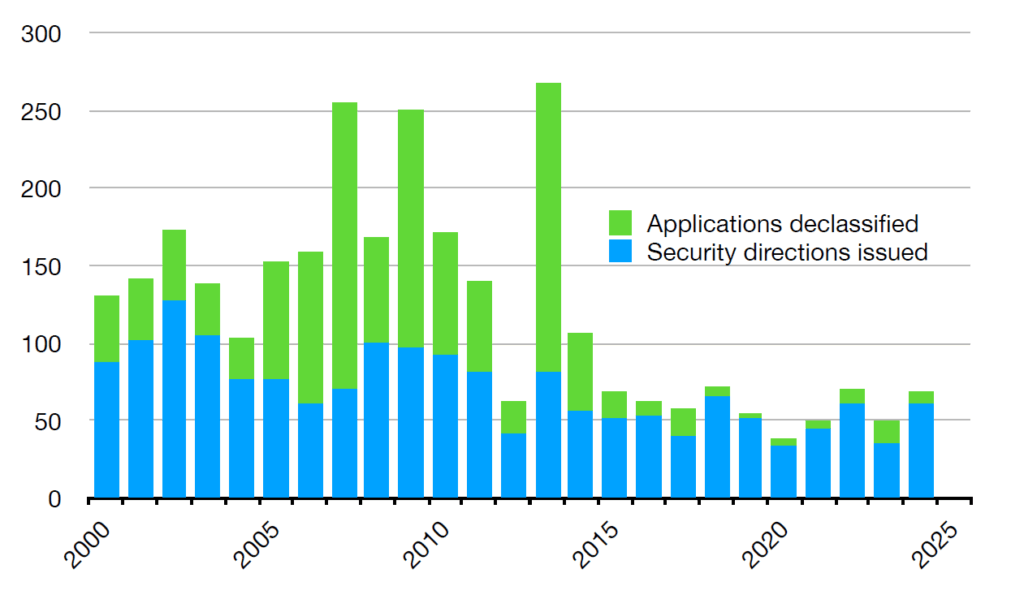
Inevitably, there is limited information on the number of secret patent applications. From the limited statistics reported by the UK IPO, it issues a secrecy direction on average once a week, a tiny fraction of the approximately 20,000 patent filings it handles each year (so unlikely to be a good metric for assessing the current state of innovation in the defence industry). Unsurprisingly, the vast majority of applications issued with such directions are filed by defence industry applicants, directly to the secrecy office.
Of all the patent applications filed since 2000, 1,755 were subject to secrecy directions, of which 1,100 of these directions remain in force. Meanwhile, 1,255 applications were declassified. The rate of declassification has evidently decreased sharply over the last couple of decades. However, since the total number of secret patents, including those which pre-date 2000, is not publicly known, it is unclear whether this decrease is because off an increased emphasis on secrecy or simply a result of fewer secret patents remaining to declassify. Restrictions on some particularly sensitive applications, such as those relating to the development of nuclear weapons, have reportedly been in place for over 80 years and are expected to remain so indefinitely.
The future of secret patents
Secret patents have a long history. But is there a place for them in the present world? The style and pace of military innovation has changed greatly since secret patents were first introduced. Barriers to entry are lower. There is less reliance on bespoke heavy engineering, more on software and AI. Many technologies are dual-use rather than exclusively military. What is proving most “prejudicial to national security” is now often based on commercial off-the-shelf products, many of which are cheap, easily available and able to be rapidly deployed in response to changing circumstances. Digital technologies have also allowed technology to be easily, widely distributed. There has been a democratisation of military technology. Innovation is (yet again) outpacing and side-stepping legislation.
So what purpose do secret patents serve? How effective have secret patents been in preventing the dissemination of technology? They are, in a sense, an attempt by governments to prevent genies from escaping their bottles. The list of proscribed technologies is very broad. There are very many bottles; is it realistic to expect to stopper them all? Historically, the significance of some inventions has been under-appreciated. In truth, while we may wish that certain inventions should not be widely available (see nuclear weapons), it is probably wishful thinking that they will remain so (see nuclear proliferation). Neither do secret patents prevent independent invention. Or espionage. What they do provide is a sense that a tide is being held back. More reassurance than reality.
Secret patents are an anachronism and are becoming increasingly irrelevant. They exist despite their inherent contradiction. The foundation of the patent system is a deal between the state and the applicant, wherein the state grants an exclusive, time-limited commercial rights in exchange for the public receiving a full description of how the invention works. Patents ostensibly exist to encourage the dissemination of inventions. Secret patents run counter to this ethos. Yet despite minor revisions over the years, and serious proposals to abolish the secrecy provisions altogether, secret patents persist. It seems we will need to go on living with them for the time being.
Sources
- Inventions and Official Secrecy: A History of Secret Patents in the United Kingdom, T. H. O’Dell,
Oxford University Press (1994) - UK IPO Facts and figures (2024)
- UK IPO Guidance Guidance: Technology prejudicial to national security or public safety
As explored in “The Line Between Beauty and Science I: Patent Strategies for Biotherapeutic Cosmetics”, in the field of bio-cosmetics, “use” claims are a valuable tool for protecting innovations involving known biotherapeutic molecules that have been found to serve a new cosmetic purpose. However, as this article explores, patent applications for such use claims must be carefully drafted to avoid falling within the European Patent Office’s (EPO) exclusions for therapeutic methods. Below, Partner Samantha Moodie and Associate Clare Pratt examine relevant EPO case law and offer practical guidance for drafting successful patent applications in this evolving area.
Cosmetic use claims: The importance of distinguishing between therapeutic and non-therapeutic effects
Under the European Patent Convention (EPC), patents cannot be granted for methods of treating the human or animal body by surgery or therapy, or for methods of diagnosis practised on the human or animal body (Article 53(c) EPC). Nevertheless, the EPO has allowed Applicants to navigate around such exclusions and protect new and innovative medical treatments by means of purpose-limited product claims (i.e. “compound X for use in the treatment of disease Y”), wherein the use of compounds or compositions in therapeutic methods determines patentability.
Crucially, cosmetic uses or treatments are not excluded under Article 53(c) EPC.
When a known compound is identified as having a new cosmetic use, non-therapeutic method claims (rather than purpose-limited product claims) can be pursued at the EPO. For example, claims may be directed towards: “Use of compound X in the cosmetic treatment of Y,” “cosmetic use of X for purpose Y,” or “non-therapeutic use of X for purpose Y.”
The EPO has acknowledged that reciting “cosmetic use” or “non-therapeutic use” in such cosmetic use claims excludes (or disclaims) any therapeutic effects that could be considered to fall within the scope of the claim, and which would otherwise render the claim unpatentable under Article 53(c) EPC. However, as confirmed in the EPO’s Board of Appeal decision T 36/83, this disclaimer language is only allowable where products have a cosmetic effect that is clearly distinguishable from any therapeutic effect. In the case in question, a claim directed to “Use as a cosmetic product of thenoyl peroxide” was found to be allowable. The Board considered that the “cosmetic” disclaimer was allowed because the medical use of thenoyl peroxide to treat acne could be distinguished from the cosmetic use of thenoyl peroxide to cleanse healthy skin.
Drafting tip: When drafting ‘cosmetic use’ patent applications, it is advisable to include basis for disclaimer wording, such as “cosmetic use” and/or “non-therapeutic use”, to clearly exclude non-patentable therapeutic effects from falling within the scope of the claims.
Cosmetic use claims: The challenge of inextricably linked effects
Difficulties arise when a molecule exhibits both therapeutic and cosmetic effects that are inextricably linked and cannot be clearly separated. In this situation, where a cosmetic method has an underlying (even if unintended) therapeutic benefit, the exclusions under Article 53(c) EPC are often applied, even if the Applicant does not intend to cover any therapeutic application.
For example, in T 290/86, a cosmetic treatment relating to the removal of plaque from teeth was considered unpatentable as this method was held to inevitably prevent tooth decay, which has a therapeutic effect. A key factor in the Board’s decision was the discussion in the description of the beneficial effects of removing plaque. The Applicant had described that plaque is a dominant etiological factor in caries and periodontal disease and that the removal of plaque was beneficial in those conditions. The Board therefore took the view that cleaning plaque from teeth will always inevitably have a therapeutic effect which could not be separated from any cosmetic effect, and which rendered the use claims unpatentable.
Similarly, in T 780/89, claims to the use of certain compounds for non-therapeutic immunostimulation (stimulation of the body’s own defences) were not allowed. The Board of Appeal took the view that immunostimulation constituted a prophylactic treatment because infection is prevented.
In these instances, since the therapeutic use could not be separated from the non-therapeutic, cosmetic use, the inevitable therapeutic effect of the biological molecule could not be excluded by the use of the “cosmetic” or “non-therapeutic” disclaimer language.
Drafting tip: If protection is only sought for a non-therapeutic, cosmetic use, Applicants should avoid including statements in the description that relate to or describe any alleged therapeutic benefit of the cosmetic molecule. Such discussions may undermine any arguments that the claimed use is purely cosmetic.
Cosmetic use claims: When dual effects are acceptable
Despite these decisions, there are some useful examples of cases at the EPO where Applicants have successfully argued that a cosmetic use is patentable, even though the method potentially has a therapeutic effect alongside the claimed non-therapeutic effect.
In T 144/83, claims were granted to a method of weight loss using an appetite suppressant. The Board acknowledged that weight loss methods could have a therapeutic purpose for treating obesity but could also have a cosmetic purpose for enhancing appearance, and that in some cases, these therapeutic and non-therapeutic uses can be adjoined “without a sharp distinction”, meaning that it could be difficult to distinguish between them. However, in this case, the Applicant’s claim specified weight loss “until a cosmetically beneficial result is achieved,” without referring to obesity treatment. As a result of this wording, the Board held that the claim was limited to a cosmetic purpose, and the exclusion under Article 53(c) EPC should not apply.
Drafting tip: If it is difficult to distinguish between cosmetic and therapeutic effects, including carefully crafted disclaimers (“until a cosmetically beneficial result is achieved“) can be sufficient to exclude any potential overlapping therapeutic effect.
More recently, T 1916/19 provided further guidance on situations where cosmetic uses are patentable even when there is a potential overlapping therapeutic effect. The application related to a composition with antimicrobial effects. At first instance, the EPO rejected the application on the ground that the antimicrobial effect would inherently provide a prophylactic treatment for pathogenic bacteria. The Board of Appeal however reversed this decision and held that there were some realisations of the claimed method that were not therapeutic. In particular, the Board took the view that the removal of bacteria from healthy skin is not necessarily prophylactic, and that the presence of pathogenic bacteria on the skin of a healthy individual does not necessarily lead to a pathological state. Further, they also acknowledged that the removal of non-pathogenic bacteria could provide a cosmetic effect by reducing unpleasant body odour. As a result, the application proceeded to grant with both a non-therapeutic method claim, covering the cosmetic use, and a purpose-limited product claim, covering the therapeutic use.
A key persuading factor in this case was the argument that the prophylactic aspect of the claimed method would not be encompassed when the method was performed on a “healthy individual”.
Drafting tip: For those inventions involving compounds that have both a therapeutic and non-therapeutic effect, whether these are considered “inextricably linked” will depend on the information provided in the application. Where there is more than one use, these different uses should be clearly distinguished in the application. If there is a possibility of the use being considered to involve therapeutic and non-therapeutic effects that are linked, it is advisable to include separate definitions of the patient group or consumer for each use. For example, when claiming a non-therapeutic, cosmetic use, it may be useful to define the user as a “healthy individual”.
When Applicants are interested in claiming therapeutic uses alongside cosmetic uses, a clear definition of the diseases that can be treated should be included alongside data that demonstrates the intended therapeutic effect. In addition, user groups relevant for the cosmetic use and separate data demonstrating the cosmetic effect should also be included.
Conclusion
Given the blurred line between cosmetic and therapeutic effects in cosmetics containing biological molecules, precise and careful drafting is essential. Where dual effects are possible, patent applications should distinguish uses, define user groups, and support claims with appropriate data. With the right approach, both cosmetic and therapeutic claims can co-exist within the same application, offering robust and flexible IP protection.
Following the release of her album ‘The Life of a Showgirl’, Taylor continues to demonstrate that intellectual property (IP) is not just a legal asset, it’s a keystone of brand power and control. Taylor has relentlessly protected her IP through several trade mark filings and reclaiming control over her master’s by re-recording her albums and branding them as ‘TAYLOR’S VERSION’. She has turned IP protection into both a business strategy and a form of artistic empowerment, but it doesn’t stop there.
Just days before announcing The Life of a Showgirl, her company, TAS Rights Management, LLC, filed a series of US trade mark applications including ‘THE LIFE OF A SHOWGIRL’, ‘TLOAS’, and ‘T.S’. These applications span a wide range of goods and services, from music and live entertainment to merchandise like jewellery, stationery, bags, and even fan clubs. It’s a clear indication that a larger rollout likely including a tour, extensive merchandise, and fan experiences is already in the works. By securing these marks early, Swift ensures she has full control over the commercialisation of her new era, while simultaneously safeguarding her brand from unauthorised use. This level of foresight highlights the strategic value of IP in the entertainment industry, not just for protection, but for monetisation and brand integrity.
This offers a timely reminder of how critical IP awareness is in any commercial venture. IP filings aren’t just a box to tick after launch, they’re part of the launch. Timing is everything as filing too early can tip off competitors, but filing too late can leave valuable assets exposed. Strategic trade mark control therefore allows artists to own their narrative, manage market timing, and prevent exposure and unauthorised use. For Taylor Swift, it’s not just about music, it’s about owning every piece of the story.
Click here to read our first article following the IP protection of Taylor Swift.
In the rapidly evolving world of cosmetics, biotherapeutic molecules, which were once confined to medical and pharmaceutical settings, are now making their way into skincare products, reshaping the landscape of anti-ageing treatments, skin repair and regenerative aesthetics.
Recent trends include the use of stem cell extracts, exosomes, polynucleotides, collagen and endonucleases in skincare products to stimulate the body’s natural healing processes. Moving beyond traditional fillers and Botox, new treatments are harnessing the body’s own biological pathways to restore skin vitality, volume and health. The credibility of using biotherapeutics in cosmetic applications has been bolstered by the formation of the Royal Society of Medicine’s Section of Aesthetic Medicine and Surgery (SAMAS), which was formally established on 1 October 2024. This development signals a growing acceptance of aesthetics within the wider medical community.
In this article, Partner Samantha Moodie and Associate Clare Pratt look at some of the key biotherapeutic molecules gaining traction in cosmetics and provide guidance on effective strategies for protecting these innovations in Europe through the patent system of the European patent office (EPO).
What are the latest trends in biotherapeutic cosmetic products?
Stem Cells
Stem cells have become a buzzword in premium skincare. They are used in cosmetics primarily for their regenerative and anti-ageing properties, although the products typically contain stem cell-derived ingredients such as conditioned media or extracts, rather than live stem cells. Stem cell therapies are being explored for skin rejuvenation, scar reduction, hair restoration and breast reconstruction, among other areas. Stem cell extracts and conditioned media can be applied topically (either alone or in combination with other treatments such as microneedling or laser ablation) or delivered via injection to achieve targeted regenerative effects.
Exosomes
Exosomes are extracellular vesicles, typically 30–150 nanometres in diameter, secreted by a range of cells including adipose-derived stem cells (ADSCs), mesenchymal stem cells (MSCs), immune cells, epithelial cells and even plant cells, referred to as plant-derived extracellular nanoparticles (PDENs). These vesicles carry bioactive cargo such as proteins (e.g. growth factors and cytokines), peptides, lipids, RNA (including mRNA and microRNA), and DNA. Crucial to intercellular communication, aesthetic medicine is increasingly harnessing exosomes as a natural means of restoring skin volume and promoting regeneration to rejuvenate the skin, reduce inflammation, enhance elasticity and hydration, and diminish fine lines, wrinkles and pigmentation. Typically administered via topical serums or creams, they are often combined with microneedling or laser treatments to enhance transdermal penetration and support post-procedural recovery.
Polynucleotides
Polynucleotides (PNs) are increasingly being used in aesthetic dermatology and high-end cosmetics. PNs are long chains of nucleotides derived from DNA or RNA and when injected or applied topically, are thought to promote tissue repair, increase hydration, and improve skin elasticity by stimulating fibroblast activity and collagen synthesis. Originally developed for wound healing and orthopaedics, polynucleotide technology has expanded into aesthetic dermatology.
Collagen
Collagen is the most abundant protein in the skin and connective tissues, providing structure, firmness and elasticity. Its natural decline with age leads to wrinkles, sagging and thinner, drier skin. To address this, topical collagen is often used to hydrate the skin and form a moisture-retaining film, creating a smoother, plumper appearance. Some products use collagen fragments (peptides) or compounds that stimulate collagen synthesis, such as retinoids, vitamin C and peptides (acetyl hexapeptide-3). A growing trend known as “collagen banking” promotes early intervention through skincare, treatments and lifestyle habits to build and preserve collagen reserves, aiming to delay the visible effects of ageing.
Endonucleases and genome-editing enzymes
Endonucleases and genome-editing enzymes, including CRISPR-associated nucleases, are a class of enzymes that can cut DNA strands at specific sites. While primarily known for their gene-editing potential in medicine, certain DNA repair enzymes are now being explored in cosmetics to correct UV-induced DNA damage in skin cells, positioned as anti-ageing or post-sun exposure treatments. Commercial products using liposome-encapsulated endonucleases claim to support DNA repair mechanisms, although the field remains nascent and scientifically complex.
Why is patent protection important in the cosmetic industry?
Research and development in the cosmetics industry can be costly, especially research relating to the use of biotherapeutic molecules. Patents play a crucial role in helping companies recover these investments by granting them the legal right to prevent others from making, using, selling or importing their inventions without permission. In addition to protecting innovation, patents offer a competitive advantage, discourage imitation, and can generate commercial value through licensing agreements. Securing intellectual property is often a prerequisite for attracting investment. Recent trends indicate that cosmetic companies are increasingly relying on patents to safeguard their innovations. The number of active patent applications filed globally in the field of cosmetics has grown year on year in the period between 2006 and 2023 (see Figure 1), and there has been a recent surge in the number of active patent applications relating to biotherapeutic cosmetics (see Figure 2).
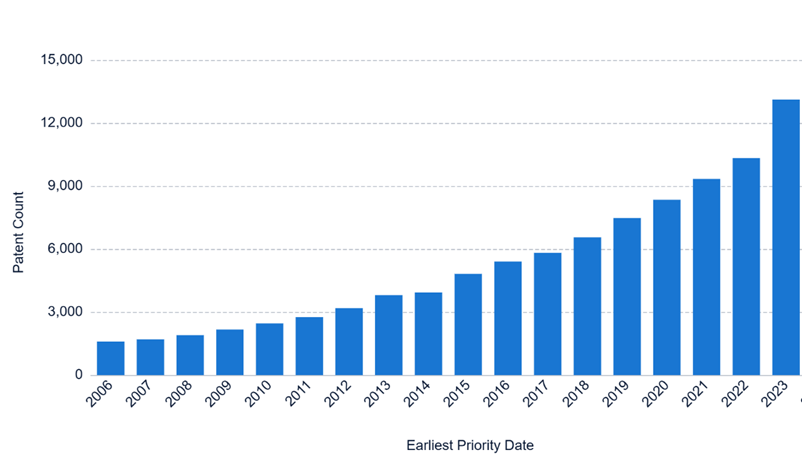
Figure 1: Active published patent filings, including granted patents, in the field of cosmetics worldwide. The bar chart displays patent families between 2006-2023 for IPC codes relating to “cosmetics” (see methodology).
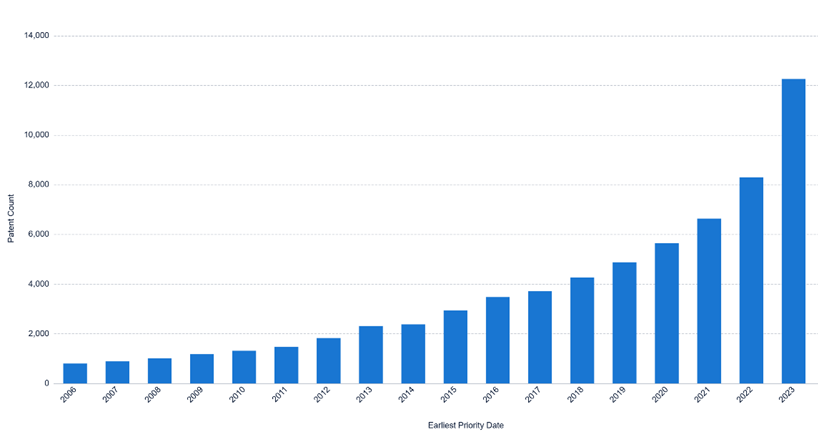
Figure 2. Active published patent filings, including granted patents, relating to biotherapeutic cosmetics worldwide. The bar chart displays patent families between 2006-2023 for IPC codes relating to “biotherapeutic cosmetics” (see methodology).
What aspect of biotherapeutic cosmetics can we protect in a patent?
Patents can be obtained to protect various aspects of biotherapeutic cosmetics, including the products per se, and their formulations, manufacturing processes and cosmetic uses. The incorporation of biotherapeutics into cosmetics blurs traditional boundaries between medicinal and cosmetic products. This grey area requires careful consideration during patent drafting and prosecution. Therefore, a key question for inventors working in these developing areas of technology is how best to gain patent protection. The optimal patent strategy will depend on whether a product, its formulation or the process for its manufacture is new; whether a new use for a known product has been discovered; and whether the intended use is purely cosmetic or also has a therapeutic effect.
Product claims
Product claims protect the composition or structure of a novel cosmetic product, such as a newly identified plant extract or a newly developed stem cell extract. Product claims are useful in a patent because they grant the Applicant the right to prevent others from making, using, selling or importing the claimed product. To obtain a product claim, the Applicant must demonstrate that the product is novel and inventive. Sufficient information should be provided in the patent application to enable preparation of the claimed product. For example, a product claim may be directed towards an anti-wrinkle cream containing a novel plant-derived molecule that achieves an improved anti-wrinkle effect.
Process claims
Process claimsprotect the method of making a cosmetic product, using, for example, a chemical, biotechnological or mechanical procedure. A process claim in a patent grants the Applicant the right to prevent others from using the claimed process and from using, selling or importing a product obtained directly by the claimed process. To obtain a process claim, the Applicant must demonstrate that the process is novel and inventive, and sufficient information should be provided in the patent application to enable the claimed process to be carried out. For example, a process patent may cover a new method of extracting a natural compound from a plant and incorporating it into a cosmetic product, or a new process for preparing a stem cell extract with improved cosmetic effect.
For many biotherapeutic cosmetics, innovation often stems from discovering new uses for known biological molecules. In this situation, the molecules themselves are not novel and the best approach for obtaining patent protection is to seek protection for the newly identified use. Use claims, therefore, protect a new or improved effect of a cosmetic product, and they grant the Applicant the right to prevent others from using the product for the claimed use.
To obtain a use claim, the Applicant must demonstrate that the claimed use is novel and inventive. Furthermore, sufficient information should be provided in the patent application to enable preparation of the product and use of it to achieve the desired cosmetic effect. The Applicant may also be required to demonstrate that the claimed cosmetic use does not involve an inextricably linked therapeutic effect, which would be considered unpatentable at the European Patent Office (EPO). (See Appendix 1)
To prove infringement of a use claim, the Patentee must demonstrate that an alleged infringer is using the product for the claimed cosmetic use. Use claims can therefore be more challenging to enforce than product or composition claims.
Composition claims
Composition claimsare another useful claim category for protecting a cosmetic product when thebiological molecule itself is known, but the formulation of the product is novel. Composition claims grant the Applicant the right to prevent others from making, using, selling, or importing the claimed formulation. To obtain a composition claim, the Applicant must demonstrate that the composition (or formulation) is novel and inventive, and sufficient information should be provided in the patent application to enable preparation of the claimed composition. Composition claims may need to include reference to the specific concentrations or ratios of the components that are required to achieve the desired cosmetic effect to be considered patentable. Composition claims are easier to enforce than use claims because infringement can be determined based on the composition of the alleged infringing product, rather than how it is used.
Conclusion
Hence, there are a range of ways in which innovations in the field of biotherapeutic cosmetics can be patented. In addition, current trends in patent filings indicate that cosmetic companies are increasingly leveraging the patent system to safeguard their inventions.
In our next article, we will take a closer look at ‘cosmetic use’ claims. As noted in this article, such claims must be drafted with particular care to avoid falling within the EPO’s exclusions relating to therapeutic methods. We will explore the relevant EPO case law on cosmetic use claims and provide practical guidance for drafting robust and compliant patent applications in this evolving area.
Appendix
- (Under the European Patent Convention (EPC), patents cannot be granted for methods of treating the human or animal body by surgery or therapy, or for methods of diagnosis practised on the human or animal body (Article 53(c) EPC). The exclusion under Article 53(c) EPC does not apply to cosmetic uses or treatments. When a compound is identified as having a new cosmetic use, non-therapeutic method claims can be pursued at the EPO. For example, claims may be directed towards: “Use of compound X in the cosmetic treatment of Y”, “cosmetic use of X for purpose Y” or “non-therapeutic use of X for purpose Y”. In such claims, the “cosmetic use” or “non-therapeutic use” language serves as a disclaimer to exclude any effect that may be therapeutic in nature and would otherwise fall under the exclusion from patentability set out in Article 53(c) EPC. However, this disclaimer language is only permissible if the claimed cosmetic effect is not inextricably linked to a therapeutic effect that is achieved when the molecule is used as specified in the claim. In Part 2 of this article, we will further consider the relevant EPO regulations and case law governing cosmetic use claims, offering practical drafting guidance for patent applications in this area.)
Methodology
The data presented in this article was obtained using Patsnap by comparing active patent “simple patent families” between 2006 and 2023 related to specific IPC codes. A simple patent family is a collection of patent documents that are considered to cover a single invention. Patent applications that are members of one simple patent family will all have the same priorities, and continuations and divisionals will be placed in a patent family with the parent application. The IPC codes used to filter the searches were: “field of cosmetics” A61Q and A61K 8/00 in comparison with “biotherapeutic cosmetics”: A61Q and A61K/8/02, A61K/8/03, A61K/8/04, A61K/8/06, A61K/8/11, A61K/8/14, A61K/8/18, A61K/8/64, A61K/8/65, A61K/8/66, A61K/8/67, A61K/8/72, A61K/8/73, A61K/8/88, A61K/8/97, A61K/8/98, and A61K/8/99.
Mathys & Squire is delighted that Partners Sean Leach, Anna Gregson, Dani Kramer and Martin MacLean have all been identified in the 2025 edition of IAM Strategy 300: The World’s Leading IP Strategists.
The IAM Strategy 300 highlights a select group of individuals recognised for their leadership in IP through innovative strategic approaches. Representing a diverse range of sectors, including service providers, corporations, research institutions, and universities, these professionals are shaping the future of IP management and value creation.
These professionals are acknowledged as top authorities in the field and are chosen through an anonymous nomination process, followed by in-depth interviews with senior figures across the global IP landscape. This includes corporate IP leaders in North America, Europe, and Asia, as well as external IP service providers. Those that demonstrate an exceptional expertise and a deep understanding of IP value creation, management, and commercialisation earn a place in the IAM Strategy 300.
The 2025 rankings are available on their website here.
We would like to thank our clients and contacts who took the time to provide feedback to the research team at IAM Strategy 300.
Ultra-processed foods (UPFs) are firmly integrated within modern diets, with factors such as convenience, store availability, cost, food waste and time impacting consumer purchase decisions. However, influences in media and government action have recently drawn attention to the potentially harmful impact of overconsuming UPFs. So, as interesting behavioural changes start to emerge for both consumers and retailers, we can look to the future to see how this shift might influence intellectual property.
What are ultra-processed foods?
Understanding the chemistry behind UPFs is crucial in understanding both sides, and the reason to their great popularity. Food groups can be divided into four groups, referenced as the NOVA classification: Unprocessed or minimally processed foods, Processed culinary ingredients, Processed foods, and Ultra-processed food and drink products.
From a manufacturing perspective, such ingredients that are included in UPFs (e.g. preservatives, antioxidants and fats) are often to increase the flavour and appearance to the consumer, whilst simultaneously decreasing costs and minimising waste. A common differentiating factor is that they often contain ingredients that would not be utilised in home cooking, and therefore are not as recognisable to the consumer.
So, why now?
The apprehension is that the overconsumption of UPFs has been found to be associated with a higher risk of adverse health outcomes, a finding that has become a hot topic of conversation. Government action, following the outline of ‘Towards a Good Food Cycle’ on July 15, popular publications, trending social media content, and daily news articles have all contributed to the increased awareness of these potential consequences, instigating consumers to reflect on their dietary decisions.
Consequently, some manufacturers are now following this trend within their food production strategy, attempting to cut down on the ingredients list to demonstrate themselves as a healthier, more transparent choice. A current example is the ‘Only…ingredients’ range from popular high street shop Marks & Spencers, which aims to highlight the simplicity of ingredients in their products, exemplified best by their famous cornflakes which solely contain corn.
For those trying to restrict their diet, either due to medical needs such as allergies or for personal preference, this transparency can be a good thing that was not always easily available in the past.
However, advocates of this practice as a general improvement have faced criticism for misinforming the public on the reality of food nutrition. In some cases, extra vitamins or supplements can be a positive addition to the nutritional value of a product. Innovation and sustainability director of vegan food brand THIS expressed his frustration regarding this misunderstanding, arguing that whilst their products are categorised as UPFs, this diminishes other benefits of their products (based on nutritional properties such as protein and fibre levels, and limiting saturated fat and sugar).
How might this impact IP?
The initial assumption might be that technical innovation within the food and beverage industry might be reduced, as producers interested in this trend attempt to strip back their recipes and reduce the ingredient list on their products, and, at least by appearance, avoid the use of “technology” in their food products.
However, the technical challenges in trying to maintain desirable properties in food products (such as, texture, flavour, shelf life, etc.) whilst limiting ingredients is, and will be, technically challenging. This may require different processes to be developed, or inventive ways to combine fewer ingredients to achieve the desired function and a comparable or improved product. It is within these processes and formulations used in the manufacturing of food that innovation can emerge, as the processes themselves may become more crucial in achieving comparable results whilst minimising ingredients. Whenever investment in technical innovation is used to provide new and advantageous products, this opens the door to obtaining patent protection for such innovations, and so IP protection can play a crucial role in staying ahead of competitors and adding value to a business.
This is not to suggest that the majority of food products will follow this path, as for many consumers and manufacturers this is not an influencing factor above cost or properties of the product. Instead, there could be a developing space for additional innovation in the sector which could influence IP trends in the future.
Our attorneys at Mathys & Squire have extensive experience protecting food-related innovations and assisting companies in carving out an advantageous position in the highly competitive food industry. If you would like to find out more or reach out, visit our food-specific sector page.
Over the past four weeks, we have been joined by students Mubarak Ahmed, Ejiro Williams and Mahfuz Ahmed in our London Office, the Shard, through our partnership with Career Ready.
Throughout their time at Mathys & Squire, they have shadowed multiple of our departments, learning from our fee earners, IP support, marketing and consulting, to gain a full understanding of the inner workings of our firm, and all the possible career paths available in IP. Alongside this, they were tasked with analysing real-life cases, presenting an invention of their own, creating a graduate brochure and much more, concluding today with a final presentation on what they have learnt about Mathys & Squire during their internship.
Mubarak Ahmed writes: “My time at Mathys & Squire has been incredibly eye-opening, insightful, and rewarding. Over the course of my experience, I’ve gained a deeper understanding for the world of IP and the vital role patent attorneys play in protecting innovations. From day one, I was welcomed in a supportive and friendly environment. I had the opportunity to work with professionals across various departments, shadowing associates, technical assistants and IPSS, every single one of them offering a unique perspective of the patent process. Beyond the technical learning, I appreciate the office culture at Mathys & Squire as its collaborative, approachable and genuinely invested in helping each other. I’m truly grateful to the team for their time, guidance and encouragement throughout my time here.”
Mahfuz Ahmed writes: “In Mathys & Squire I got to do many shadowing sessions with the teams within this company, for example learning about marketing, the records team, IPSS, and trade marks. I learned many valuable skills that I can take into other work environments which will help me significantly. Skills like close attention to detail, listening and taking in information quickly, and communicating more confidently with new people I meet.”
Ejiro Williams writes: “I really enjoyed my 4 weeks internship at Mathys & Squire. The staff were so friendly and always willing to help at any time. I developed many essential skills which I feel will be of good use such as: public speaking, collaborative working and close attention to detail. Thank you for having me! I would 100% recommend to future graduates who are currently studying a science or computing degree!”

Elijo Williams, Mubarak Ahmed and Mahfuz Ahmed in our London Office.
All our departments were thoroughly impressed with the work of all of the students, and we look forward to watching them prosper in their future careers.
Career ready is a UK-wide charity working to increase accessibility into professional workplaces for young people, giving them the chance to understand the opportunities available across different workplaces.
Read more about our CSR and D&I initiatives in the relevant links.
Partners Hazel Ford and Alexander Robinson have been featured in the Life Sciences IP Review (LSIPR) providing insights on the latest developments impacting the European Patent Office Boards of Appeal, following their discussion held at LSPN Spring North America 2025.
In their talk, they analyse the evolving legal landscape in the life sciences sector in light of recent decisions prompted by the Unified Patent Court, offering a valuable perspective on how these changes may affect patent strategies across Europe.
To watch the full video click here.
How can you keep track of innovations made by your competitors? Do you even know who all your competitors are? Monitoring patenting activity can help, but there are limitations. Surprises can still happen, sometimes from unexpected quarters.
June 2025. Another week, another news article with a colourful photograph of a rocket exploding. But as news feeds were focussed on the latest ‘Starship’ blow-up as SpaceX doubled down on its fail fast, learn fast methodology, the attention of much of the space industry was elsewhere. To northern Japan, where a day earlier a prototype rocket had risen some 300m into the air and, a minute later, redeployed its landing gear and landed flawlessly a short distance away. The technology was undoubtedly impressive, but the most newsworthy aspect was the identity of the company behind it.
Since the first commercial launch system was offered by Arianespace in the 1980s, arguably the greatest advances have come from SpaceX, who first demonstrated the result of a decade of development by launching a reusable rocket in 2015. Since then, SpaceX has become by far the dominant player with currently over 100 orbital launches a year. It has also inspired numerous start-ups. But the new rocket was not from any of those. The unexpected new entrant in the reusable rocket space was the venerable Japanese car manufacturer: Honda¹.
What was ostensibly a car company doing launching a reusable rocket? And could anyone have seen this coming?
The monitoring of patents – and in particular the filing of new patent applications – is often presented as a key tool for competitor intelligence. What areas are your competitors working on? What new innovations have there been in your field? Have there been any new entrants? Patents are by design a good source of technical information; to secure a patent monopoly requires full disclosure of the workings of the invention, which nowadays is readily available on free public databases.
However, patent monitoring is an imperfect tool. The language can be obscure, a dense mix of technical and legalese, sometimes deliberately so. Subject classifications are not always appropriate. The ultimate corporate owners can be difficult to determine. And patent applications typically only publish 18 months after the initial filing, so any such monitoring is inevitably somewhat behind the curve.
Another reason to be wary is that the incentives to file patent applications differ; what works for start-ups is not always appropriate for more established companies. The former tend to file early in the innovation process to indicate commercial potential, secure investment, and to protect their key innovation ahead of any public demonstration. We can see this with the large number of reusable rocket start-ups with a handful of patent filings, perhaps some successful ground-based test firings, but as yet no successful launches. Large companies (or those with more secure funding) tend to have a broader technological base and no need to engage in such market signalling.
Leaving aside ideological reasoning (Elon Musk once famously quipped that patents are “for the weak” and claimed SpaceX was a patent-free company; a position since evidently revised), for some companies, the very requirement to disclose in full details of the invention is seen as a drawback, allowing competitors an unwanted innovation leg-up. Instead, development is undertaken largely in secret, with intellectual property being protected through corporate culture – or in case that fails, formally buttressed via strict non-disclosure employment contracts and the potential for litigation.
Honda seems to be adopting this secrecy approach, at least initially. Since first declaring an interest in developing space technologies in 2019, they have kept a low profile. Footage of an earlier rocket test firing was only shown in grainy black-and-white, possibly to avoid disclosing details of the propellant.
They evidently take patents seriously, however. Established in the 1940s, Honda is one of the largest automobile manufacturers in the world, with vast experience in combustion technology, fluid handling, etc., and a large R&D department with a reported willingness to allow young engineers opportunities to work on projects of their own. For the past two decades, Honda has filed over 1,000 patent applications a year.
Honda also has prior form in diversifying into other technology areas, whether done primarily as a proof-of-concept and public-relations exercise (as with the ASIMO humanoid robot programme, since discontinued) or commercially. Honda has, for example, a successful side line in business jets and a small portfolio of aviation-related patents.
That said, Honda seems unlikely to be aiming to compete with SpaceX as a commercial launch provider. Rather, this may be a case of vertical integration, a company looking to support its core business by moving into adjacent technologies. Honda may in time provide its own satellite links for ‘connected vehicles’, avoiding over-reliance on the present dominant supplier (Starlink again).
Whatever the reason, Honda could well become a major force in the intellectual property of space, following similar industrial giants such as Toyota, Mitsubishi, and Hyundai, all of which have been building space-related patent portfolios.
So if your company is warily eyeing existing competitors and wondering where the next threat might come from, how can you anticipate competition arising from established companies crossing over from other sectors?
- Be aware that innovation and competition not only come from smaller companies and startups. Not all large companies are dinosaurs.
- Appreciate that patent monitoring is important but also imperfect and so must be part of a wider analysis.
- Take public pronouncements seriously. Whereas start-ups seek to make headlines, larger
companies may be indicating a deliberate strategy. - Identify companies with the means, motive, and opportunity to vertically integrate or diversify.
- Note when unexpected new entrants move into your technology area and consider whether there are similar companies which might do likewise.
You may also wish to consult with your patent attorney. Despite the drawbacks with patent monitoring, there are sometimes faint signals which a patent attorney might identify. A couple of years ago, a Honda patent application was published with the intriguing title “Landing gear for flight vehicle”. There was no mention in the patent specification of space or the launching of rockets. But a remarkably similar landing gear was seen deployed a few weeks ago in northern Japan.
¹ https://global.honda/en/topics/2025/c_2025-06-17ceng.html
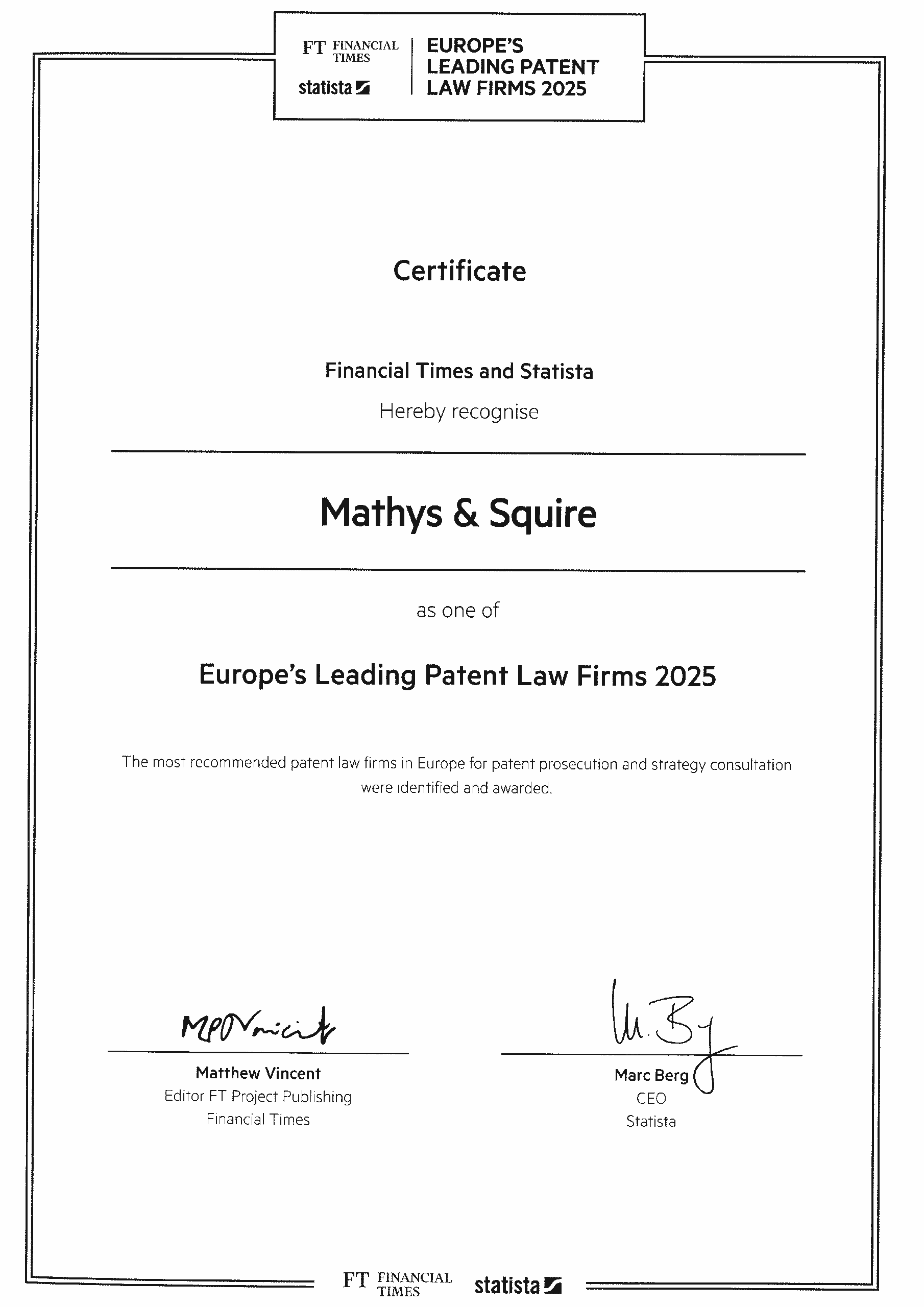
We are delighted to be ranked as a leading European patent law firm by the Financial Times (FT) in their 2025 report.
The Financial Times Europe’s Leading Patent Law Firms list identifies the most recommended firms in Europe for services related to patent prosecution and strategic advice, and is compiled by the FT’s research partner Statista.
As well as featuring as a leading patent firm, we have also been recognised in five specialist areas of industrial expertise this year: ‘Biotechnology, Food & Healthcare‘, ‘Chemistry & Pharmacy‘, ‘Electrical Engineering & Physics’, ‘IT & Software‘, and ‘Mechanical Engineering.’
We are greatly appreciative of all of our clients and contacts who have taken the time to recommended our firm as part of the FT’s research.
To access the full report and rankings tables, please visit the FT website here.