Quantum technology is entering a new stage in its lifecycle, leaving the lab and undergoing commercialisation. At this early stage, the question of how to translate quantum innovation into robust patent protection across different legal jurisdictions is a crucial one.
In the EU, for example, there have been exciting shifts in investment and policy across the field. Over €11bn of public funding has been funnelled to quantum in the last 5 years and an EU Quantum Act, following the Quantum declaration in 2023 and the Quantum Europe strategy adopted in 2025, is expected to be released soon. Patent activity has not yet caught up: whilst 32% of the world’s quantum companies reside in the EU, only 6% of quantum patents come from its member states.
Quantum technology poses various challenges for IP strategy. Multilayered technical systems call for multilayered approaches, and the patentability of software and algorithms can be contentious in the world of IP. Furthermore, there is still considerable uncertainty about which technical architectures or business models will persist which casts doubt over what is most beneficial to seek protection for.
On 15th July, Partner Edd Cavanna and Technical Assistant Daniel Speed from our Quantum team took part in a webinar with the IP Business Academy, sharing their expertise on protecting quantum innovation across the stack. Click the video below to watch the full webinar or read on for an overview of their insights.
Determining what is patentable
Quantum inventions are highly complex, constituting an entire protection landscape rather than a single protectable entity. Sifting through hardware architectures, control systems, protocols, manufacturing processes, software and mathematical methods, and enabling technologies to determine the core of the patent application may seem a daunting task.
The most crucial requirement for patentability arises under ‘inventive step’ (in Europe at least). This means that the invention must not be obvious to a person skilled in the relevant field; it must be novel, in other words, demonstrate a notable difference in comparison to prior art; and critically it must solve a technical problem.
The protectable contribution may arise at different levels, requiring different kinds of scientific understanding and different approaches to IP protection. Quantum computing hardware and control, quantum software, quantum simulation in chemistry and life sciences, quantum communication, post-quantum security migration, quantum sensing, timing and metrology, quantum enabling technologies and supply chains, and more, can all be treated as their own unique areas with different underlying strategies, both commercial and IP-related. Patentability hinges on the characterisation of the invention, the expression of its technical contribution and the jurisdiction in which protection is sought.
With quantum hardware, it can be clear what aspect solves a technical problem, such as a technological advancement which enhances coherence, system stability or noise reduction. In comparison, in UK and European IP law, as well as other jurisdictions, there is more contention over whether software is patentable. The multitude of abstract concepts in quantum demands careful thought.
Academics and scientists often have preconceptions about what an invention should be that differ significantly from what an invention looks like within the context of intellectual property. The most obvious or scientifically interesting feature may not always be the most patentable; that could be a lower-level technical detail, like a solution for laser stabilisation or a UHV engineering fix, hidden behind the quantum protocol which the scientific paper is built around. It is important not to overlook the improvement which makes a quantum system possible when focusing on the scientific result.
Framing the technical contribution
The complex requirements behind patentability are where patent attorneys and external IP counsel come into play. You may think of an invention as something objective; however, IP offices and courts hold specific opinions over what can be protected. A large part of what patent attorneys do is framing the invention or technical contribution in the right way to achieve protection.
Strong invention storytelling transforms highly complex scientific ideas into something concrete and convincing which can be patented, connecting the technical contribution of an invention to its commercial relevance and strategic value. And by staying abreast of the legal systems around the world, patent attorneys know what works in each specific jurisdiction.
Defining your business goals
Beyond the scientific facts behind the technology, it is also vital for patent attorneys to understand a company’s business plan and goals, information which scientists or academics may not initially deem relevant when talking to IP counsel.
It is not just about whether something is patentable or spending money to patent everything, but whether the patent will be valuable for your business. Apart from protection, patents play an important role in attracting investors and can also be licensed for additional revenue.Therefore, a forward-looking IP strategy, expertly crafted and commercially minded, is essential. Furthermore, applying for a patent can involve a certain level of risk. If an invention does not get granted, it will likely still be published, disclosing any technical details.
Therefore, IP strategy is an exercise in prioritisation. Patent attorneys can conduct ‘invention mining’ to determine which features are likely to succeed, as well as which features support the product roadmap and future competitive position.
Collaborating through IP
The multi-faceted nature of quantum innovation means companies must coordinate protection across the entire quantum stack to achieve a coherent protection architecture. However, it may not be necessary or possible to have sole ownership over every aspect of the quantum innovation.
Crucially, patents can be a collaborative tool as well as excluding competition. Companies can license patents to each other or initiate joint ventures, facilitating the accessibility of core technology and creating additional revenue streams. In the field of AI, for example, a form of symbiotic relationship is arising between companies: the chips are designed to run what the AI companies are generating, driving developments in the chips, and the chip manufacturers determine how the AI companies can best structure their algorithms to be most efficient. Similar feedback cycles may start to occur across the quantum industry, such as algorithm companies feeding back to hardware developers.
Thus, the multi-faceted nature of the quantum industry does not necessarily result in individual endeavours to gain patent protection for every single aspect in a stack, but may instead create a landscape of collaboration between a lot of diverse entities.
Talking to IP experts
As an inventor in the quantum field, it is important to think beyond the pure scientific technicality of a quantum invention. Crafting an effective IP strategy involves considering multiple factors, such as patentability requirements under country-specific IP law and commercial tactics. The quantum field may be complex, but the fundamentals of IP strategy remain the same: protect what supports the product, business model and intended market position.
At Mathys & Squire, we close the research-to-patent gap in quantum technology. Our patent attorneys can help you dissect your innovation and achieve protection which aligns with your business needs. Combining technical expertise in the quantum field and extensive IP experience, our attorneys understand how the facets of a quantum invention interact with the legal requirements operating in different patent systems across the globe.
To get in contact with our quantum patent attorneys, click here.
After years of anticipation, the FIFA Men’s World Cup 2026™ is under way in North America. Unsurprisingly, meticulous planning and preparation at an unprecedented scale has gone into staging what is widely seen as the biggest sports tournament of all time. Beyond the colossal stadiums and fan parks, football’s governing body FIFA (Fédération Internationale de Football Association) and its partners have prioritised innovation to enhance the experience for fans and players alike.
The football pitch has transformed into its own technological system. Cameras, sensors and AI merge seamlessly to generate a network of data to help referees officiate matches with more accuracy and transparency. To what degree these objectives are being met cannot be known for certain, but it is undoubtable that the implementation of these technologies has fundamentally altered the nature of ‘the beautiful game.’
The integration of data in sport, as well as advancements in the capabilities of sports equipment, have created a fast-growing category of intellectual property. In the last decade, the number of published patent applications worldwide related to sport grew at an annual compound rate of 7.6%. One in 6 published patent applications in sports technology were for football, highlighting the strategic importance placed on innovation by those involved in and running the sport. With large companies competing on a global level and innovating at a rapid pace, these major players recognise that securing intellectual property protection and enforcing those rights is vital.
In no place is this more apparent than at this year’s World Cup. Whilst our eyes are glued to the pitch, waiting to see who will score, we are also watching intellectual property in action.
Trionda™: The official World Cup ball
Across each venue, an array of complex technology works together to facilitate a smooth match and live global broadcasting. Take all this away and we are still left with the most foundational and yet one of the most innovative pieces of equipment in the game: the ball.
The official ball of the tournament, Trionda™ (“tri” meaning three and “onda” meaning wave in Spanish) is both a feat of engineering and a visual symbol. Every aspect of it has been carefully designed by Adidas™, the official ball supplier for the World Cup since 1970. Each tournament has seen new technological advancements and a unique design, both of which can be protected through intellectual property rights.
Form
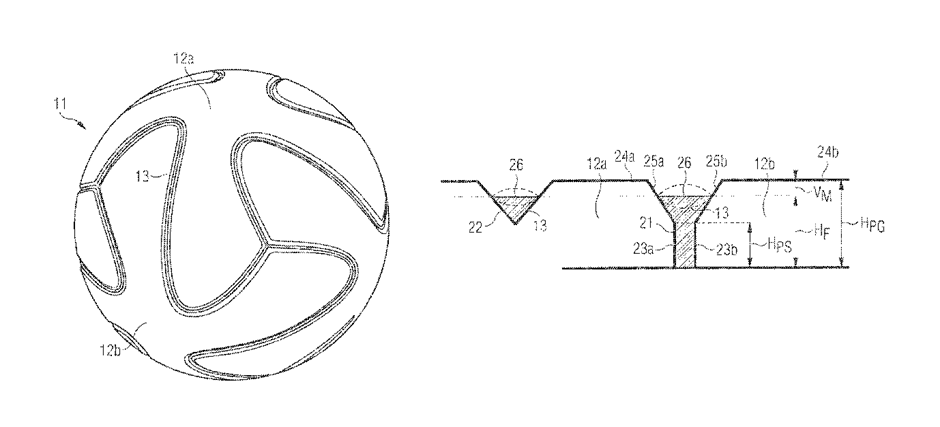
The ball is constructed from four thermally bonded polyurethane panels, the lowest number of panels in a World Cup ball. The panels curve together, imitating the wave mentioned in the ball’s name, and join in a triangle, representing the union of the three host countries. The colours and details represent the host countries as well: red for Canada, green for Mexico and blue for the USA, and the ball is covered with almost invisible symbols: a maple leaf, an eagle and a star.
The unique structure of the football was registered as a design (DM/241148) in October 2024 under the International design registration (‘Hague’) system. This means the design can be protected in several key jurisdictions, including the UK, US and EU. Adidas™ filed a multi-part design application to pursue a broader overall scope of protection by displaying different elements in each design, such as the base pattern, the colours and the embossed symbols.



DM/241148 – WIPO Global Design Database
Function
Beyond aesthetics and branding, the design also serves a functional purpose. The embossed pattern, for example, enhances grip in wet conditions, whilst the intentionally deep seams optimise flight stability. This could well be the reason why the ball has behaved unexpectedly in the air and has caught goalkeepers off-guard in the early stages of the tournament, as noted by several commentators and analysts.
A key requirement for obtaining patent protection is that the invention provides a solution to a technical problem. Features of a ball which have been specifically developed for improved performance, such as better grip or faster flight, would seemingly satisfy this condition. Adidas™ owns a patent (US10376750B2) which references the way a ball with four panels is constructed to have grooves between the panels so it is more aerodynamic. The description of their US patent No. 8529386B2 discusses how a lower number of seams allows for players to control the ball more consistently, but large panels can result in “unintended or unpredictable flutter movements.” The patent’s claims refer to the addition of “pseudo-seams” between real seams which do not deform the ball but nevertheless stabilise the flight of the ball.
The new digital game
During the 2022 FIFA World Cup™, Adidas introduced the world’s first smart ball: designed to enhance refereeing performance. The technology has been upgraded for this year’s edition and has seen an expanded role in helping the on-site and Video Assistant Referee (VAR) to make quicker and more accurate decisions during matches.
Inside the ball
The ball contains an ultra-lightweight Inertial Measurement Unit motion sensor to facilitate Semi-Automated Offside detection. Careful innovation ensures that the addition of the sensor does not negatively impact the ball’s performance and that the internal structure survives the unique conditions of being inside an active ball. For example, in previous iterations, the sensor was suspended in the middle of the ball, but this caused issues on account of continuous, high-velocity impacts which could weaken the tension of the wires holding it in place. In this year’s ball, the sensor is mounted inside a layer within one of the panels instead.
And so, the four-panel layout takes on a third role beyond aesthetics and aerodynamics: enabling the integration of the sensor. The geometric symmetry, combined with identical counterweights in the other panels, preserves the ball’s centre of mass, so its flight is not affected. The low number of panels also allows for as much space as possible to accommodate electric hardware between seams.
Another major consideration is how to ensure the sensor does not lose power in the middle of a game. This is solved by a lightweight internal battery which is chargeable via localised secondary coils. There is no external port which would disrupt the ball’s smooth shell and a ball charged for 90 minutes lasts 6 hours.
US Patent No. 12533561B2, filed in 2024, seems to be a precursor to the fully optimised smart ball, referencing “a method for monitoring the motion of a sport ball impacted during the course of an athletic activity” involving “a portable electronic device wirelessly receiving motion data from the sport ball, and the portable electronic device determining a point of impact based on the motion data.” Further patent specifications related to the sensor appear to not be publicly available yet.
Outside the ball
Known as ‘connected ball technology,’ the data is captured 500 times per second and is transmitted to the VAR system. This is 10 times faster than the typical frame speed of video technology used in football. Over one match, 10 to 15 balls are used; when a ball is thrown in, the system registers the kinetic impact, instantly and automatically transferring the role of active data tracking to the new ball’s hardware ID.
The data from the ball is integrated with information from cameras mounted beneath the stadium roof which track up to 29 data points on each player and read the bodies 50 times per second. All this data is processed by AI, generating automated alerts for the VARs and recreating the entire match in 3D with digital avatars for each player.
The complex fusion of hardware, software and AI in the ball as well as off-the-pitch equipment makes the picture even more interesting for intellectual property strategy. A layered strategy is necessary to ensure all aspects of a technological system are protected by separate patents.
In addition, the innovation at the World Cup highlights the importance of partnerships and IP licensing. Strategic partnerships enable the development of complex technology, whilst IP licensing is a smart way for businesses to monopolise their assets or gain access to other markets. For example, Adidas™ has partnered with German technology company, Kinexon™, which specialises in ultra-wideband tracking technology for sports applications, for the sensor technology. Adidas™ owns the patent covering the core integration of the sensor, whilst Kinexon™ contributes the software technology, possessing expertise in areas such as ultra-wideband localisation, real-time positioning systems and the synchronisation of multiple wireless sensors. There is real value in protecting your innovation, even if you are not a manufacturer yourself, as it can be very lucrative to licence out your technology to a bigger player. And this is only made possible by having a robust IP strategy.
The jury is still out on whether the latest technology demystifies refereeing decisions for the average fan. Pursuit of this goal, however, has certainly highlighted the role of intellectual property in the shaping the future of our game.
Partner Claire Breheny and Trainee Trade Mark Attorney Ashley Low have been featured in World Trade Mark Review, sharing their insights on the rules surrounding alcohol packing in the UK and how to ensure compliance.
Their commentary highlights the difficult balance between adhering to tight regulations, such as no health claims or designs which appeal to under-18s and building a compelling brand image. In addition, as labels on alcohol drinks must clearly state the type of alcohol, such as “whisky” or “rum”, this may also cause complications for trade mark protection, where a name must be sufficiently distinctive to be eligible.
Click to read the full article here.
The Pride flag is an interesting example where instant recognition and widespread fame actually undermine distinctiveness.
In this article, D&I Partner Andrea McShane and Trade Mark Partner Harry Rowe discuss the history behind the legal protection of the Pride flag and why businesses would struggle to register it as a trade mark now.
The history of the Pride flag
The first rainbow flag was stitched in 1978 by Gilbert Baker, a gay artist, drag performer and activist, for San Francisco’s annual Pride parade. He chose the rainbow as a symbol because of its beauty and its representation of diversity; originally, the flag featured eight colours: hot pink for sexuality, red for life, orange for healing, yellow for sunlight, green for nature, turquoise for magic and art, indigo for serenity and violet for spirit. The flag gained a new loaded meaning after Harvey Milk, politician and gay rights icon, who requested the design of the flag, was assassinated the same year.
For practical reasons, eight colours went down to six – hot pink fabric was inaccessible in large quantities and the turquoise stripe was removed to make the number of stripes even for symmetry – but its purpose and significance stayed constant.
In 2018, designer Daniel Quasar created the “Progress Pride flag”, adding a chevron with white, pink and light blue to represent transgender and non-binary individuals, and black and brown to represent people of colour in the LGBTQ+ community.
Is the Pride flag protected by law?
Gilbert Baker chose not to apply to register the Pride flag as a trade mark after he devised it. Interestingly, when an advocacy organisation attempted to register the flag as a trade mark in 1978, Baker enlisted Matt Coles, LGBTQ+ civil rights lawyer, to resist the endeavour.
Baker purposefully wanted to keep the flag free to use, as its symbolic power across the LGBTQ+ movement was more important than any potential commercial value, and proactively protected the community’s right to using the flag. He wanted it to belong to everyone.
The ‘Progress Pride’ flag is protected by copyright, an automatic right for artistic works, but Daniel Qasar offers a free Creative Commons licence for non-commercial use. The community can display it with appropriate attribution, but exploitation by large brands is prevented.
Could you register the rainbow as a trade mark?
UK law allows for the registration of a trade mark comprising any sign which distinguishes the applicant’s goods or services from those of other businesses, provided that the mark can be represented unambiguously on the register. This can include colours. For example, Cadbury successfully registered its purple (Pantone 2685C) colour mark in 1998, although the registration has since been surrendered. Similarly, a set of specific colours arranged in a certain way, like a rainbow, could also be eligible for trade mark protection.
However, as colour marks are typically not inherently distinctive, a brand would usually need to prove that the mark has acquired distinctiveness on account of its use over a number of years. The rainbow we know and love in the Pride flag is undoubtedly recognisable, but it is for this reason that a single business or organisation seeking to monopolise the sign would face difficulty. The Pride flag, or the rainbow alone, arguably could not indicate a specific commercial origin to consumers because they are already widely associated with a universal movement. That being said, it may be possible for a rainbow incorporated in a mark which includes other distinctive elements to be protected under a trade mark registration.
The Pride flag is an example of a strong symbol, which is widely recognised around the globe, but that recognition has been utilised to reinforce a symbol of community, rather than as a brand. It represents freedom, in the way it stands for LGBTQ+ rights and in the way that the ability to monopolise it is likely limited by trade mark law.
Read more about our commitment to fostering a diverse and inclusive culture at Mathys & Squire on our D&I page here.
As London Climate Action Week gets underway, the conversations dominating the agenda tend to involve renewable energy, carbon markets and sustainable infrastructure. Weight management medication is rarely on the list. Yet the rapid rise of GLP-1 receptor agonists, the class of drugs that includes semaglutide, sold as Ozempic and Wegovy, is beginning to redefine the eating habits of millions of people, and society’s eating habits have profound implications for the planet.
The recent approval of the first oral GLP-1 tablet in the UK removes one of the biggest practical barriers to uptake. With injectable GLP-1s already used by nearly 1.9 million adults in Great Britain, a figure that has nearly tripled in two years, oral formulations are likely to drive adoption to an entirely new scale. As these drugs become more accessible, their wider effects on the food system come into sharper focus.
Eating less, eating differently
It is well established that the most immediate effect of GLP-1 drugs is that users significantly reduce their food intake. A 2024 study from Cornell University found that households with at least one GLP-1 user reduced grocery spending by 5.3% within six months of adoption, rising to 8.2% in higher income households.
However, GLP-1 users are not simply eating less, they appear to be eating differently. The study also showed that the largest spending reductions were concentrated in calorie-dense, processed food categories, including a 10.1% decline in savoury snacks. A 2026 Guardian investigation found that more than half of GLP-1 users described their approach to eating as ‘mindful’, guided by hunger rather than habit. Three-quarters ate less chocolate, and 72% reduced their consumption of crisps. A Danish study analysing over 1.9 million supermarket receipts confirmed the broader pattern: after starting GLP-1 therapy, participants spent a larger share of their shopping on unprocessed foods and a smaller share on ultra-processed foods. Yoghurt was the only food category to record a statistically significant increase in spending.
There is, of course, a legitimate question about cause and effect. People who use GLP-1s are, by definition, engaged in active weight management, and some of the observed dietary improvements may reflect that broader motivation rather than the pharmacological effects of the drug itself. Nevertheless, there is a plausible biological mechanism. GLP-1 drugs have been found to slow gastric emptying and dampen hunger signals in ways that appear to alter the neurological drivers of cravings, particularly for high-fat and high-sugar foods, in a manner that willpower and dietary advice have historically struggled to replicate.
Why ultra-processed foods are a climate concern
The environmental significance of a shift away from ultra-processed foods (UPFs) is considerable. UPFs now account for over 70% of food sold in grocery stores in the UK and US, and represent more than half of total calorie consumption. Research published in Nature Sustainability found that, although UPFs represented just 19% of participants’ diets by weight, they contributed disproportionately to environmental pressures: 24% of diet-related greenhouse gas emissions, 23% of water use, 23% of land use, and 26% of energy demand.
This outsized footprint reflects the full lifecycle of ultra-processing: from extensive monoculture agriculture and high-energy manufacturing to long-distance supply chains and excessive packaging. A longitudinal study published in Science of the Total Environment found that participants who made substantial reductions in UPF consumption reduced their carbon footprint by 0.6 kg of CO₂ equivalent over the study period.
It is also worth noting that UPFs are, to a degree, engineered to undermine the very satiety signals that GLP-1 drugs seek to restore. Ultra-processed foods are known to suppress the effectiveness of key gut hormones — including the body’s own endogenous GLP-1 — that signal fullness, making overconsumption an almost predictable outcome. In that respect, GLP-1 drugs do not merely suppress appetite, they may be partially correcting a cycle of overconsumption that certain food products have, by design, helped to entrench.
The protein question
Were the story simply one of reduced consumption of calorie-dense, processed foods, the environmental case would be relatively straightforward. However, the picture is complicated by a concurrent shift in protein demand.
GLP-1 drugs produce significant weight loss, but a significant proportion of that loss, estimated at between 40% and 50%, can come from lean muscle mass rather than fat. To mitigate this, clinical guidance strongly recommends that GLP-1 users substantially increase their protein intake, typically to between 1.2 and 2.0 grams per kilogram of body weight per day, well above the standard dietary recommendation. The commercial consequences are already being felt. For example, the price of whey protein, derived from dairy, has risen fivefold in recent months as global demand has outpaced supply.
The environmental impact of this protein surge depends heavily on which protein sources consumers are actually turning to. On this point, the available evidence is somewhat reassuring. Multiple consumer surveys and market datasets suggest that GLP-1 users are gravitating away from red and processed meats and towards leaner alternatives: fresh poultry, fish, eggs, legumes, and lighter dairy products such as yoghurt. A study published in Food Quality and Preferences, surveying nearly 2,000 consumers, found that 45% of GLP-1 users reported eating less beef than before starting the medication. The likely mechanism is consistent with the drug’s known effects. By amplifying satiety signals and slowing gastric emptying, GLP-1s appear to make heavy, fatty foods — red meat, cold cuts, hard cheeses — less appealing.
From an environmental perspective, this directional shift is meaningful. Producing a kilogram of beef generates approximately 60 kg of greenhouse gas emissions; a kilogram of poultry generates around 6 kg. Dairy products sit at an intermediate level, though lighter formats such as yoghurt carry considerably lower footprints per unit of protein than hard cheese. Research published in Nature Climate Change has estimated that the worldwide adoption of a diet aligned with the EAT-Lancet planetary health diet, characterised by a shift from red meat towards legumes and nuts as principal protein sources, could reduce global annual dietary emissions by 17%. The dietary changes seen as a result of GLP-1 use appear to be moving in that more environmentally favourable direction.
Where the picture becomes more complicated
The food industry’s response to GLP-1 users has seen the proliferation of ‘GLP-1 friendly’ products, protein bars, fortified shakes, high-protein ready meals, which represents, in many cases, a new category of highly processed food. If users are substituting one form of processed consumption for another, the environmental benefit may be more limited than the headline shift away from snacks would suggest. The sustainability outcome appears to depend critically on whether increased protein density is genuinely replacing excess calorie consumption, or simply creating an additional category of demand.
It is important to position GLP-1-related dietary changes within a broader cultural context. The emphasis on protein consumption has become well established. Notably, the new US Dietary Guidelines, published in January 2026, have inverted the traditional food pyramid to place protein at its base, reflecting a wider societal shift in nutritional priorities. Separating the specific contribution of GLP-1 use from this wider trend is difficult. It should also be noted that most of the available evidence on what GLP-1 users actually eat is derived from consumer surveys and supermarket receipt data, rather than controlled clinical trials, and should be interpreted with the appropriate caution.
A disruption to the food system, not a climate intervention?
It would be overreaching to present GLP-1 drugs as a climate intervention. However, GLP-1 drugs are proving to be an undeniable disruptor of the food system, and one that is growing in scale and likely to grow further as oral formulations reduce the barriers to access. Meanwhile, research published in Nature Climate Change suggests that diet shifts represent one of the most powerful demand-side mechanisms available for reducing food-system emissions. It is clear that the food industry is already responding to the shift in consumer preferences, although whether that translates to a net positive environmental impact remains uncertain.
GLP-1 medications will not, on their own, deliver the scale of dietary transition that climate targets require. However, by reducing appetite for the food products most associated with overconsumption and environmental pressure — and by nudging both consumers and producers towards a greater emphasis on nutritional quality — they may be contributing to a more sustainable direction of travel.
Whether the shift in consumer habits is durable – particularly beyond the period of active medication use – and whether the commercial response from the food industry reinforces or diminishes the potential environmental benefit, remains to be seen. Nevertheless, particularly during London Climate Action Week when there have been numerous extreme heat weather warnings in the capital, it seems that the impact of GLP-1s on society’s eating habits and its wider environmental implications should form a part of the broader climate conversation.
In honour of Cervical Screening Awareness Week in the UK, which takes place from 15th to 21st June, we will be talking cervical tests, challenges facing development in women’s health and some practical solutions.
What is a cervical screening test?
Cervical screening, which used to be called a smear test, is a test to check the health of the cervix and help minimise the risks of cervical cancer. All women aged 25 to 64 are invited for cervical screening every 5 years and everyone with a cervix should be offered screening.
The test involves a tube-shaped tool, known as a speculum, being inserted into the vagina, which opens to allow the doctor to see the cervix and collect a sample of cells. Cervical screening checks for a virus called high-risk Human Papillomavirus (HPV). If high-risk HPV is present, then the sample will be checked for cervical cell changes.
Cervical screening is estimated to save around 5000 lives a year in the UK due to early diagnosis of cancerous cells enabling more effective treatment. Despite this, the NHS website states that currently around one third of eligible people do not come forward for their screening.
Why are 1 in 3 women turning down potentially life-saving treatment?
Sânziana Foia, founder of Papcup, for whom we have recently filed a patent application, has spoken about the historical lack of innovation in certain areas of women’s health which can make life-saving treatment an unnecessarily scary or unpleasant experience for women. After her first cervical screening, she began to wonder if there could be a less invasive alternative to sampling with speculums.
In response, she created Papcup, a self-testing device that detects HPV. Unlike the tests offered by the NHS today, Papcup is designed to spot high-risk HPV in menstrual blood using bio-sensor technology. The device does not require vaginal insertion and you do not even need to leave the comfort of your own home in order to perform the test. Papcup could provide a viable alternative for women who have suffered sexual trauma, or who are virgins or for any other reason feel uncomfortable about inserting something into their vagina.
Beyond the literal physical discomfort of cervical screening, many women may feel a general discomfort around their sexual and vaginal health. Taboo does not just stop women helping themselves but also prevents the health system and innovation landscape advancing, so that women face barriers accessing the help they need.
Is women’s health taboo?
Historically, the healthcare system has not been inclusive. Men have frequently been treated as the default patient in clinical practice and medical research, and women’s health and healthcare needs have often been marginalised.
In 1977, the Food and Drug Administration (FDA) created a policy to exclude women of reproductive potential from Phase 1 and 2 clinical trials unless they had a life-threatening condition. It wasn’t until 1993 that the US Congress passed a law requiring the inclusion of women in clinical research.
As recently as 2019, a study by Harvard Medical School showed that women accounted for roughly 40% of participants in clinical trials for three of the diseases that most affect women — cancer, cardiovascular disease, and psychiatric disorders — despite representing 51% of the U.S. population.
Another recent study of the funding of 18 different types of cancers by the National Cancer Institute found that gynaecologic cancers (ovarian, cervical, uterine) ranked 10th, 12th and 14th, respectively, in funding normalized to years of life lost, whereas prostate cancer ranked 1st.
Women of colour face even greater underrepresentation in clinical trials and medical research, which often does not report the intersection of biological sex and race.
Even as technology advances, we see these gender discrepancies prevail. Modern digital health trackers and AI symptom checkers are frequently calibrated against baseline male physiology (heart rates, temperatures). This leaves women at risk of misdiagnoses or inaccurate fitness, heart, and fertility metrics when they are tracked via consumer apps.
This is why digital femtech tools specifically designed to monitor women’s health are so vital. Innovators in femtech are striving to undo centuries of neglect, finally collecting and analysing the data which could give us the answers on how to transform women’s lives.
Problems facing innovators in Femtech and how we solve them
Ignorance and taboo in relation to women’s health penetrates not only the health system, but the investment landscape too. We have seen the potential which femtech has to do what doctors have failed to do for years, but there are barriers to widespread deployment beyond regulatory medical approval.
Femtech investment struggles partly because venture capital is predominantly male. This creates demographic disproportionality, where investors struggle to understand or empathize with female-specific health needs. Additionally, the lack of historical exits in femtech means that, with no precedents to point to, many VCs hesitate to take early-stage risks.
Taboo also seeps into social media and online platforms, negatively impacting investment opportunities. These platforms frequently miscategorise women’s reproductive health content as inappropriate, creating marketing barriers that heavily deter risk-averse investors.
Overall, this leads to a severe lack of funding, with investment in Femtech making up for only around one to two percent of total health tech investment in 2025.
This lack of funding means that treatment in women’s health often lags behind other treatment and as a result women’s treatment is unnecessarily antiquated, invasive and ineffective.
Intellectual property for femtech
At Mathys and Squire, we are excited to work with intellectual property (IP) targeting Femtech and to support the inventors who are making progress in this area. This technology will combat problems facing women’s health, such as the physical and mental discomfort surrounding cervical screening.
In sectors with high rates of innovation, IP is essential for protecting inventions, attracting investment and supporting commercial security. A robust IP portfolio can assist Femtech innovators in obtaining funding by demonstrating concrete assets and the potential for market dominance without the risk of being copied by competitors.
For more information relating to patentability and managing intellectual property, please reach out to a member of our team.
Mathys & Squire is delighted to announce a series of senior promotions across our UK offices.
The promotions reflect our continued dedication to strategic growth as a firm, as well as the value we place on career progression.
In recognition of their hard work, the following have now been appointed as Partners:
- Adam Gilbertson (Birmingham office) – Adam specialises in the areas of physics, optical and electronic devices, as well as systems, materials and software inventions. Currently, he is assisting in the prosecution of a suite of patent applications on AI technologies. He also has significant experience working with SMEs and spinout companies, providing patentability and infringement opinions for decision making.
- Leonard Wright (London office) – Leo advises clients, from startups to large corporations, across a broad range of industries with a particular focus on medical devices, computer-implemented inventions and mechanical engineering. He has recently been involved in handling offensive and defensive oppositions at the EPO, and has also advised on a number of litigation cases at the new UPC.
- Oliver Parish (London office) – Oliver works across a range of technologies in the fields of physics, engineering and software; his recent work has focused on high-tech innovation in quantum computing, photonics and semiconductor technologies. He also has extensive experience in strategic and contentious matters, having advised clients in respect of disputes regarding the infringement and validity of patents and registered designs, as well as patent licensing, IP due diligence, and freedom to operate.
In our London office, the below have been promoted to Managing Associate:
- Daniel Varley – Daniel advises clients across a broad range of engineering sectors including medical devices, optics, security systems, autonomous vehicles, consumer products, and renewable energy. Alongside his work drafting and prosecuting patent applications, he has extensive experience in securing international design protection.
- Sarah Linnett – Sarah specialises in the fields of biotechnology and cell biology with a particular emphasis on vaccines, antibodies, gene therapy and stem cells. Her work involves drafting patent applications, managing global patent portfolios and coordinating prosecution across various jurisdictions.
- Siobhan Durran – Siobhan primarily works in the field of biotechnology and pharmacology and has specialist expertise in small molecule pharmaceuticals, antibody technology and recombinant protein therapeutics. She has experience in the drafting and prosecution of patent applications in the UK, Europe and Worldwide.
- William Wathey – Will’s work covers a range of engineering, physics and IT technologies, with particular focus on medical devices, software/AI, autonomous vehicles and telecoms. He has extensive experience drafting and prosecuting patent applications in the UK and Europe, as well as handling international patent portfolios and advising clients on wider IP strategies. Will enjoys actively engaging with startup and scaleup ecosystems, regularly providing IP advice to support early-stage companies through funding rounds, valuations and due diligence processes.
In our Cambridge office, two of our Associates have been promoted to Managing Associate:
- Peter Humby – Peter works in the IT & Engineering team and handles patent matters on behalf of a wide range of applicants, from private inventors, universities and startups to larger corporations, including multinational telecommunications and video games companies.
- Rachael Martin – Rachael has a broad technical background in biological sciences, spanning diagnostics, therapeutics, nucleic acid-based technologies and bio-based materials. She works with a range of clients including startups, SMEs, universities and large corporations.
Martin MacLean says, “It was with great pleasure that we announce these promotions and recognise the achievements and talent of our new Partners and Managing Associates. Their commitment to delivering excellence and dedication to their clients has shone through during their time with us, and we look forward to seeing how they will continue contributing to the success of the firm. At Mathys & Squire, we are passionate about supporting career progression and rewarding hard work, and this is an important step in the firm’s strategic growth.”
These promotions have been covered in Law360 and NewLaw Journal.
In honour of Diabetes Awareness Week in the UK, which takes place from 8th to 15th June, we will be taking a closer look at the innovations which are revolutionising treatment.
This article will also discuss the role of intellectual property in the development of medicine and medical devices designed for people living with diabetes, and how companies can ensure they maintain a strong position in the market through their patent strategy.
What is diabetes?
Diabetes is a condition where the body cannot properly regulate the amount of glucose in the blood, leading to high blood glucose (hyperglycaemia) which can harm blood vessels, and limit the flow of oxygen and nutrient-rich blood to the body’s organs and nerves.
The level of glucose in the blood is regulated through the actions of two opposing hormones, glucagon and insulin, which are produced in the pancreas by alpha- and beta- cells, respectively. These cells are found in discrete clusters within the pancreas known as islets. Insulin triggers the absorption of glucose from the bloodstream into cells of many tissues throughout the body including fat, liver, and muscle cells.
Diabetes occurs when the body cannot properly make or respond to insulin. Type 1 diabetes (T1D) is a complex chronic autoimmune disease where the immune system destroys insulin-producing beta cells in the pancreas. In comparison, type 2 diabetes (T2D) is a metabolic disorder, often developing later in life, where the body becomes resistant to insulin or does not produce enough.
How do you treat diabetes?
The number of people with diabetes worldwide is rising and is expected to reach over 850 million by 2050, but tackling the disease remains a challenge.
Diabetes can be managed through insulin therapy, which involves daily insulin injections or use of insulin pumps to continuously deliver insulin to the patient. In 1922, Frederick Banting and Charles Best treated a teenager with T1D for the first time by injecting insulin isolated from dog pancreas. They famously sold the patents on insulin and the method of making it to the University of Toronto for $1 each in 1923. Since these early days of insulin therapy, scientific advances have included the creation of artificial insulin molecules such as short-acting insulin analogues (e.g. Lispro and Glulisine) and long-acting analogues (e.g. Glargine and Degludec) to more closely mimic the actions of normal insulin.
Nevertheless, insulin therapy is not curative and must be combined with the constant monitoring of blood glucose levels to avoid complications such as hypoglycaemia, (a dangerous low blood glucose episode). The need to constantly manage blood sugar can place a serious strain on a person’s daily life, as well as on their mental health.
However, in recent years, research into diabetes has reached a turning point. Scientists are exploring new treatments which tackle the root cause of type 1 and 2 diabetes and fully restore insulin production, leading to a future where people suffering with diabetes may no longer reliant on insulin therapy. Solutions are also emerging which make monitoring and management a lot easier, such as holistic approaches to overall health, and “med tech” device ecosystems integrated with digital AI tools to streamline and automate insulin delivery.
Key focus areas in innovation
The rise of medtech
Advancements in medtech and the digitalisation of healthcare has allowed for more accurate tracking of blood glucose levels in both T1D and T2D patients, as well as the possibility of automatic insulin injections.
For example, implantable continuous glucose monitors (CGMs) enable real-time tracking of glucose levels and can help patients understand how food, physical activity and daily routines affect their blood sugar levels, and make small self‑management changes. Recent innovations in the CGM field focus on sensor chemistry as well as improving sensor accuracy, lifespan and user comfort.
A particularly active area of patenting concerns the integration of CGMs with digital health platforms and automated insulin delivery systems to allow accurate 24/7 control. Entire device ecosystems, known as an “artificial pancreas” or a closed-loop system, may reduce the burden on people with diabetes. These systems combine a CGM in communication with an insulin pump, and a control algorithm to enable the devices to predict and respond to glucose fluctuations without user input. Such systems can also be integrated with machine learning and AI to facilitate the analysis of data and offer predictive insights.
The UK is a global leader in the rollout of hybrid closed-loop systems for people living with T1D. Following years of research and advocacy, the treatment has been offered on the NHS over the last few years and has contributed to the reduction of ethnic and socioeconomic inequality in access to diabetes treatment.
The intersection of integrated digital solutions with drugs has significantly influenced patent strategy, with innovators seeking protection for medical devices, software, predictive AI algorithms, methods for data sensing, calibration, integration and cloud storage, and user interfaces, for example, alongside next-generation therapeutic drugs to cure or modify diabetes.
A curative breakthrough for type 1 diabetes
There is currently no cure for diabetes, but the future may look different. We are seeing a movement beyond insulin therapy towards curative or disease-modifying therapies.
Immunotherapies are a new kind of T1D treatment. In 2025, the drug Teplizumab (also known as Tzield®), was approved by the UK’s Medicines and Healthcare products Regulatory Agency (MHRA) for people aged 8 and over. Teplizumab is a monoclonal antibody which modifies the immune system to prevent it from attacking insulin-producing beta cells, and is the world’s first immunotherapy for T1D. It delays the progression of stage 2 T1D into stage 3 T1D, when the diabetes becomes clinical and individuals require insulin therapy; however, it does not prevent its onset forever.
Immunotherapies such as these could be used alongside regenerative medicine, which, in the case of T1D, would repair or replace the beta cells which have been destroyed. This has been shown to be a highly promising pathway towards a cure, but there are still obstacles to overcome.
Islet transplants, involving the transplantation of islets from donor pancreas into the liver of someone with T1D, have been available in the UK since 2008, but are only used for a very small number of people. Donor islets are limited, their quality differs, and patients usually require more than one transplant. Protecting the transplanted cells from the body’s immune system in order to keep them alive and working is a major challenge; transplant patients must receive strong immunosuppressants which increase infection risk and put strain on the kidneys.
Scientists are now working to solve these issues. For example, a recent first in human study showed that gene-edited “hypoimmune” donor islet cells can successfully evade detection by the immune system and continue to produce insulin for over a year post-transplant.
Stem cell and biomaterials engineering approaches are also being harnessed to produce insulin-producing cells from stem cells, and to protect implanted cells from attack. An ongoing clinical trial in T1D patients is investigating the function of lab-grown, human stem-cell derived beta cells, and has shown promising results with patients restoring natural insulin production following transplantation.
The move to stem cell therapies will reduce the need for organ donors and enable treatments to be more scalable, and preliminary studies are underway to investigate the possibility of using autologous stem cells from the patient themselves to bypass the need for immunosuppressants.
Cell therapies are becoming one of the most important strategic areas in diabetes IP. Patent activity is increasing across the board, covering the engineered cells themselves, methods for genetic engineering and manufacturing of the cells, and devices or compositions for encapsulation and delivery. As the environment becomes more crowded, cell therapies for diabetes could become the next major patent battleground.
A holistic health approach for type 2 diabetes
One evolving class of drugs for T2D work by mimicking hormones that the body releases after eating. For example, GLP-1 is a gut hormone which binds to receptors on beta cells and tells them to release insulin. GLP-1 receptor agonists are a class of medications that mimic the gut hormone GLP-1, enhancing insulin secretion, suppressing glucagon, slowing digestion and reducing appetite. They can help people with T2D reduce blood sugar levels and lose weight, which enhances insulin sensitivity.
The success of GLP-1 therapies has made them a major focus of pharmaceutical innovation and commercial investment. The intellectual property landscape has become highly competitive in recent years, with protection expanding beyond the underlying core molecular chemical structures to encompass delivery devices, dosing regimens, manufacturing processes and combination therapies. Recent commercial successes have further intensified innovation and competition with companies seeking protection for specialised oral formulations and multi-target therapies.
While most GLP-1 therapies require regular and systemic administration through injections or oral dosing, emerging gene therapies aim to provide long-lasting benefits from a single treatment. In a significant milestone, the first-ever clinical trial of a gene therapy for T2D has recently received regulatory approval in Europe. The therapy uses adeno-associated virus (AAV)-based gene therapy to deliver instructions for making GLP-1 directly to beta cells in the pancreas. Unlike conventional GLP-1 therapies, patent protection in this area has focused on vector design, tissue-specific expression systems and promoter technologies, scalable manufacturing processes and methods of delivery.
The benefits of GLP-1 therapies extend beyond blood glucose management. Growing evidence supports that a more holistic treatment approach for T2D by integrating GLP-1 therapy with overall health management, rather than focusing on blood glucose control, leads to 8% fewer cardiovascular events, 7% fewer hospitalisations and 7% fewer bed days, putting less pressure on the healthcare system.
Key takeaways for patent strategy
Maintaining exclusivity and market control grows increasingly important as the diabetes treatment landscape evolves, with opportunities for innovation expanding and changing in nature as competition rises.
Pharmaceutical companies can no longer rely on “core molecule” protection and composition-of-matter patents alone.It is important to have a strong product pipeline with multidisciplinary patent portfolios in place to layer protection, as well as iterative strategies to ensure the protection lasts as long as possible. For example, protection can be extended through SPCs and secondary patents protecting devices, formulations, dosage regimes or additional medical indications. Secondary patents may be just as commercially valuable as the drug itself and secondary filing strategies should be considered early in patent strategy to maximise protection.
In addition, as innovation within diabetes becomes more collaborative, bringing together pharmaceuticals and biotech, freedom-to-operate (FTO) analyses and licensing agreements become more complex. There are many overlapping patent families to consider across a single treatment approach and it is vital to get an idea of the level of competition or any broad patents in the area. To avoid the risk of litigation, early FTO analysis at the very start of a research project and ongoing FTO surveillance is vital, and companies are increasingly leaning towards strategic licensing and acquisitions across key jurisdictions.
Whilst diabetes remains a significant health challenge, we are getting closer to a point where people living with diabetes can become independent from constant management, and from an external insulin source. Diabetes treatment is evolving from a “drug category” into a full metabolic health platform ecosystem, and patent strategy is evolving with it.
World Environment Day 2026 is upon us, with its focus this year being on the direct action needed to tackle climate change. A cornerstone of this fight is the expansion of electrification using renewable energy, which comes hand-in-hand with battery developments capable of supporting this expansion.
For many applications, including the much-publicised electric vehicles market, Li-ion batteries are the prevailing energy storage means due to their established efficacy, excellent energy density and cycle life. However, as the electrical revolution progresses, innovation in energy storage solutions is being driven by the host of new applications and situations which electrical implementation must now account for. For instance, sodium-ion batteries have the potential to perform better than Li-ion batteries under lower temperature conditions, avoiding the significant drops in capacity and charging/discharging issues at lower temperatures (e.g. below 0 °C).
Clearly, batteries are an increasingly fundamental technology underpinning most, if not all, aspects of modern life; that is why investment and innovation is of great importance. And there are signs that advanced battery technologies are starting to make the leap from the lab onto the road. Earlier this year, the first passenger vehicle to be mass-produced with a sodium-ion battery was announced. An electric vehicle using a semi-solid-state battery (containing an electrolyte composition that is 95% solid) has recently been unveiled to be coming to the UK in late 2026.
As you might expect from a field with such significance to so many aspects of everyday life, there is a tremendous amount of activity on the patent front. In addition to being essential tools for protecting and commercialising your intellectual property, patents can also provide insights into the technological landscape of a given field. In this article, we’ll take a look at what the patent filing data for a selection of key cell chemistries says about the battery sphere today, and what it might suggest for the future.
Lithium-ion batteries
First released in 1991, the Li-ion battery has, with the help of some further significant developments, exploded in popularity (and only occasionally in aeroplanes) to become the most widespread of modern batteries due to their high energy density, efficiency and long lifecycle. Li-ion batteries have found utility across the spectrum of possible applications, from personal electronics to major components in electric vehicles (EVs). There are a number of cell chemistries that fall within the general category of “Li-ion battery”, varying most significantly in their cathode materials. These include: lithium nickel manganese cobalt oxide (NMC), lithium nickel cobalt aluminium oxide (NCA), lithium iron phosphate (LFP) and lithium cobalt oxide (LCO) cells.
Accompanying this boom in Li-ion battery adoption is a corresponding growth in patent applications in the field.
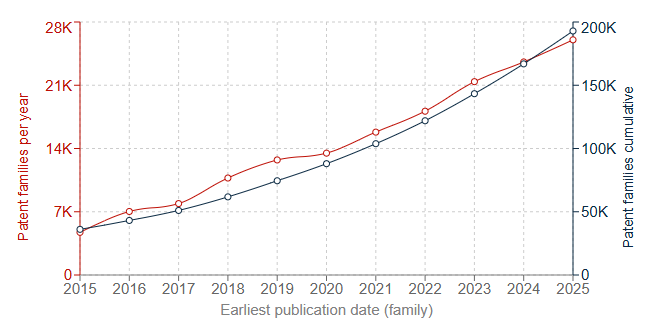
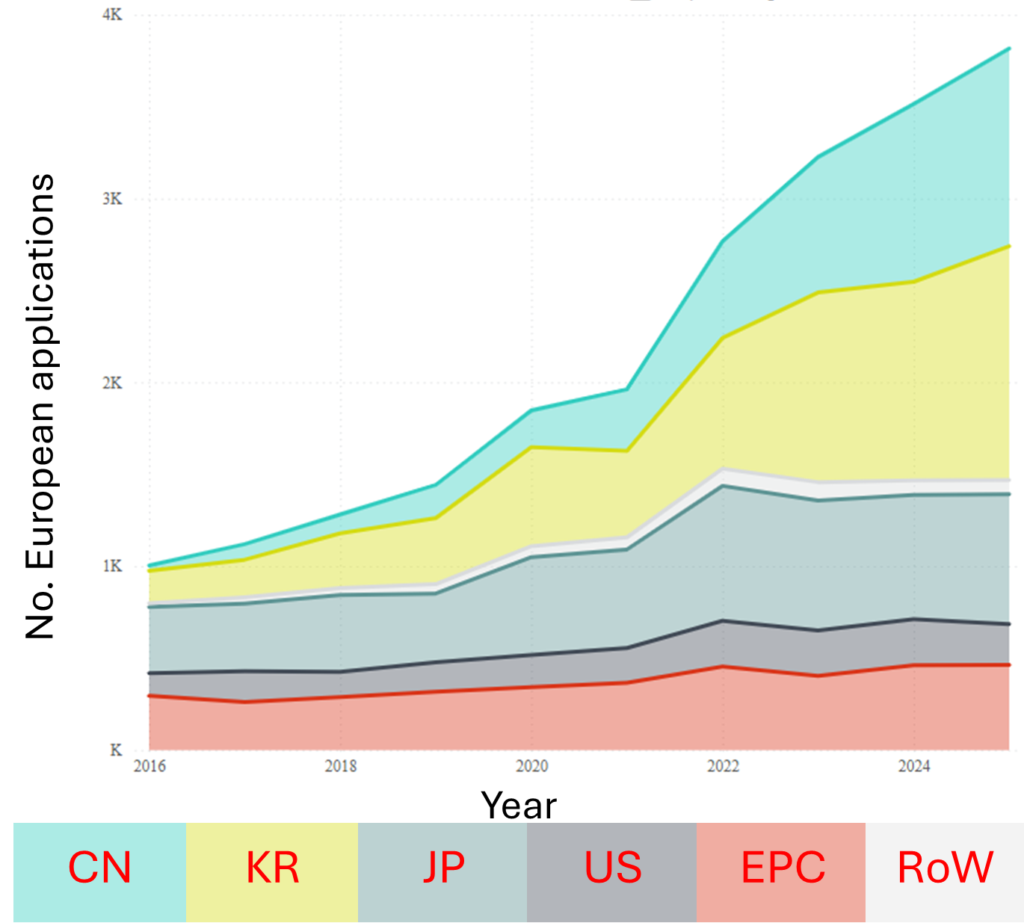
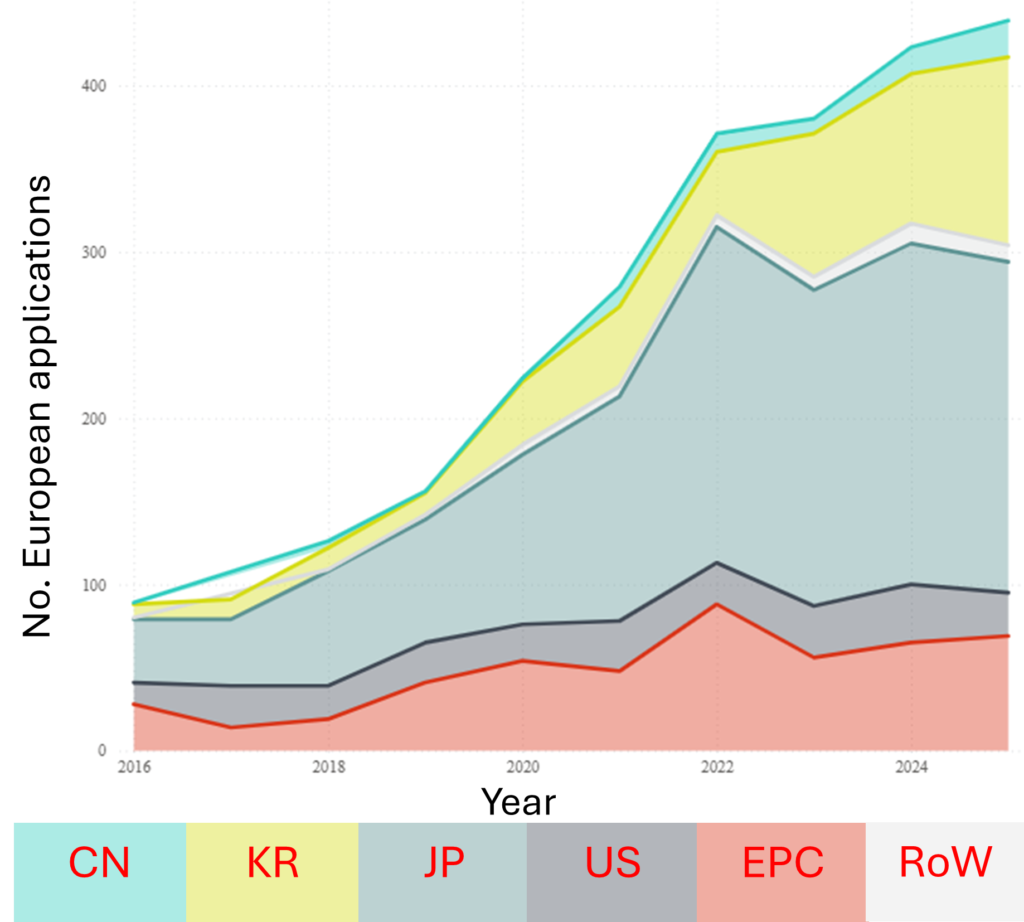
Fig. 1A shows the number of patent families published per year worldwide between 2015 and 2025 relating to Li-ion batteries. Fig. 1B shows the number of EP patent applications published between the years of 2016 and 2025 relating to Li-ion batteries, and includes a breakdown of these according to the applicant’s country.
As can be seen from Fig. 1A, the number of worldwide patent filings related to Li-ion batteries has grown steadily in the years between 2015 and 2025, reflecting their widespread adoption and development: in 2015, around 6000 patent families were published, contributing to a total cumulative number of around 40,000 patent families directed to this subject-matter. By 2025, this had increased to around 26,000 families published that year alone, and a cumulative number of patent families approaching 200,000.
Similar increases are apparent in EP applications, with a particularly notable rise in applications coming from Chinese and South Korean applicants in the past 5 years. Even though Li-ion battery technology, at a base level, has been around for quite some time, patent filings are clearly still growing, highlighting the keen interest and range of developments in the field.
However, one area of Li-ion battery technology that may still be in its (relative) infancy is recycling. In addition to the clear environmental benefits of recycling, Li-ion batteries contain several valuable elements, the efficient recovery of which is desirable from an economic standpoint. Given the typical lifespan of 10 to 20 years of Li-ion batteries and the increasing number reaching end-of-life stages in the near future, there may be a growing incentive to implement effective and economical recycling methods. The development of economical methods may be especially important for certain cell chemistries (such as LFP cells) which present more of an economic challenge due to the lower content of the more valuable elements, such as cobalt. While the number of patent applications directed towards such recycling methods seems to be growing year-on-year, it still remains a relatively minor portion of overall filings, with approximately 400 patent families published in 2025.
Sodium-ion batteries
Sodium-ion batteries are an emerging technology with significant potential for further innovation and applicability to current battery implementations. Whereas Li-ion batteries rely on lithium ions as charge carriers, sodium-ion batteries utilise (unsurprisingly) sodium ions. Otherwise, at least in their current forms, sodium-ion battery architecture is broadly similar to Li-ion battery cells, although the use of sodium ions allows for different electrode materials that often involve less expensive elements. For instance, current sodium-ion cells often employ layered transition metal oxide or Prussian white cathodes. Further cost benefits arise due to the abundance of sodium, as compared to lithium, as a key component, which can help to alleviate possible supply chain issues.
As already mentioned, sodium batteries also come with certain performance advantages over Li-ion batteries, albeit (at least at present) mainly only under specific conditions. In particular, sodium batteries can function effectively over a wider range of temperatures while maintaining good efficiency and capacity metrics that can be roughly comparable to Li-ion batteries under normal conditions.
Although initial research into sodium-ion batteries roughly coincided with Li-ion batteries, the early promise of Li-ion cells caused their sodium-based sibling to fall by the wayside. However, commercial interest began to be renewed in the 2010s; this is reflected in the patent filings, as shown in Figs. 2A and 2B.
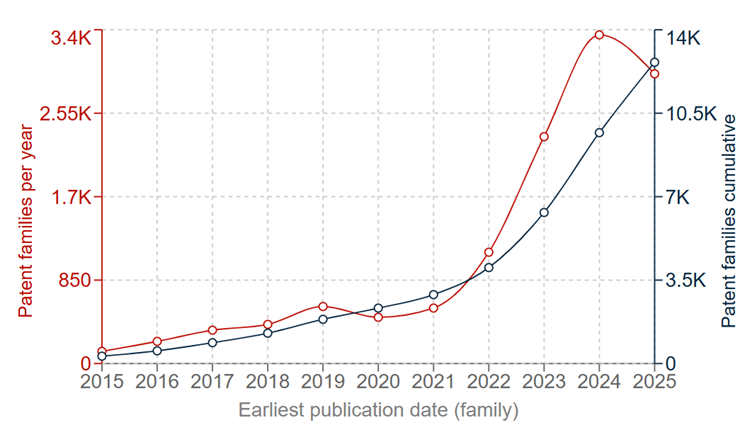
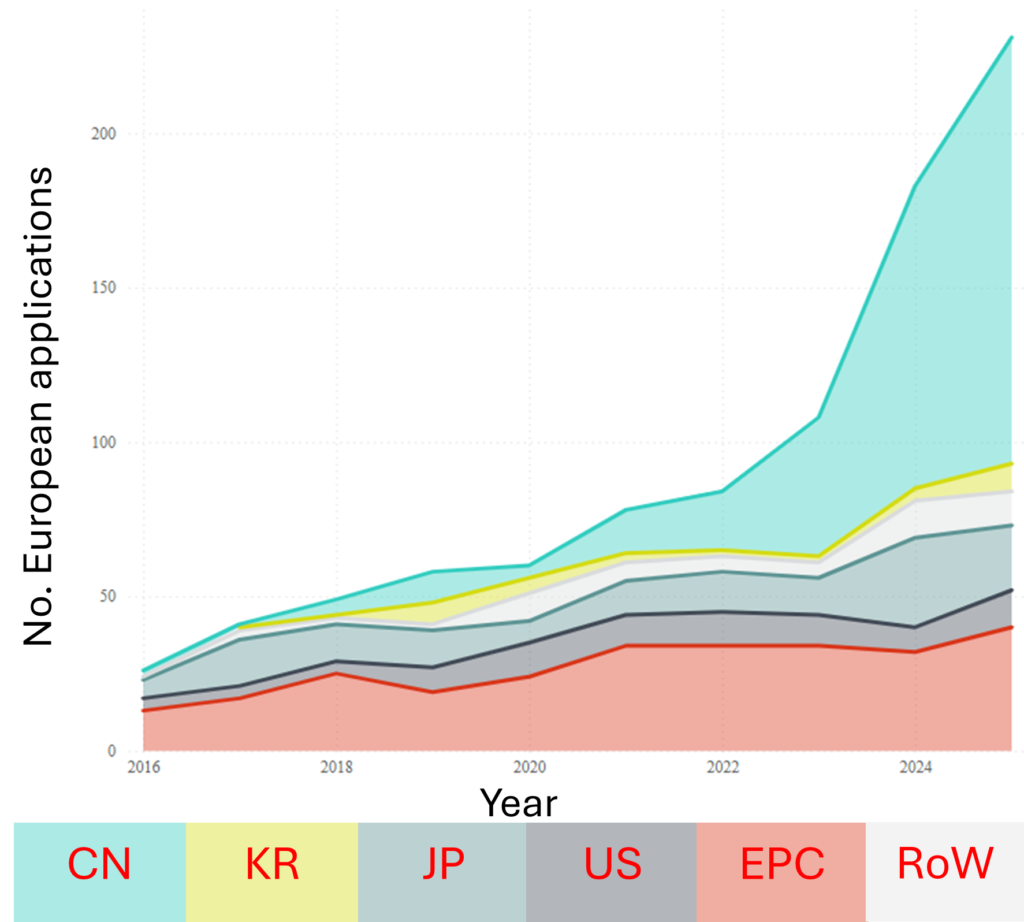
From only a handful of patent families published per year in the mid 2010s, patent filings grew steadily to about 500 patent families in 2021. From this point, there has been a surge in applications, with nearly 3,500 patent families filed in 2024 alone, adding to a cumulative total of around 10,000 families. It remains to be seen, however, whether the slight decline in 2025 represents a genuine cooling in interest, or simply a minor fluctuation.
Certainly, the EP filings show no decline in patenting activity, which is being driven primarily by China who are a clear frontrunner in sodium-ion cell chemistry. However, the sodium-ion battery field is one of the relatively rare situations where EPC countries are in a comparatively prominent position (in terms of filing numbers).
Comparing these numbers with the Li-ion data, patent filings for sodium-ion batteries are only at a similar level to Li-ion batteries in the early 2010s. This could point to there being plenty of potential for further innovation and development, particularly if their commercialisation is successful.
Lithium-sulfur batteries
Lithium-sulfur (LiS) batteries are developments of more typical Li-ion batteries, based on replacing the cobalt or iron-based cathode material with one consisting of S8 sulfur. In these batteries, lithium ions are stored as lithium sulfide (Li2S) during discharge, creating the potential for a cell with much higher specific energy than allowed for by the intercalation of Li-ions in conventional Li-ion cells.
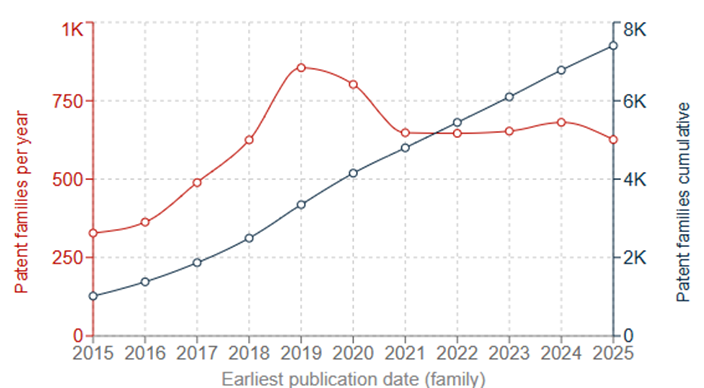
While the potential benefits from developing a successful LiS battery could be enormous, there are still barriers to overcome in the technology if they are to be successfully commercialised, such as electrode expansion and polysulfide shuttling. These barriers may be posing a challenge, or at least acting as a deterrent, since LiS battery technology appears to remain in its very early stages compared to conventional Li-ion batteries, despite the first LiS prototype batteries having been around since as early as the 1960s. This is reflected in the worldwide patent filings in Fig. 3A: from about 300 patent families published in 2015 of a cumulative 1,000 patent families, filings reached a peak of about 850 families in 2019 but have since diminished to a consistent number of about 600 patent families filed per year. These numbers are similar to those of Li-ion batteries over 20 years ago.
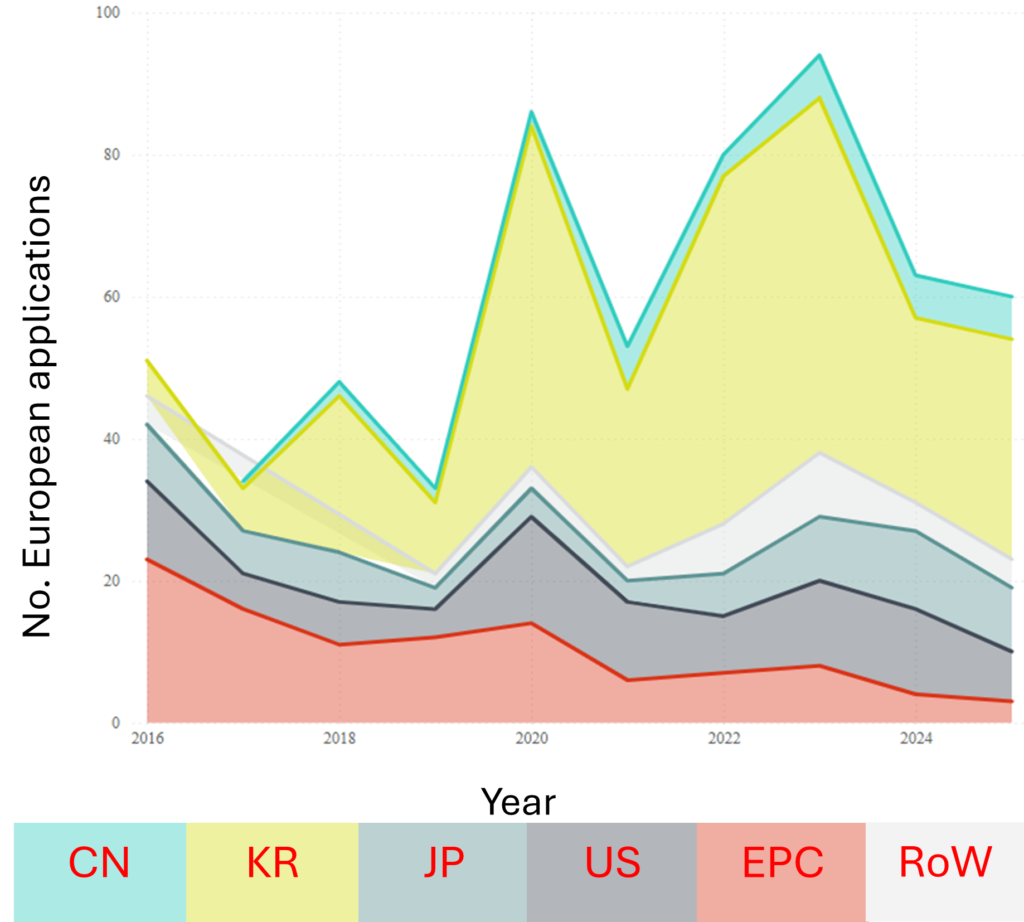
A lack of widespread adoption is also suggested by the EP data in Fig. 3B, which shows both a similar trend of declining applications in the past couple of years, and an overwhelming dominance in the field by South Korean applicants.
Solid state batteries
Conventional Li-ion batteries typically make use of liquid electrolytes, consisting of lithium salts in various organic solvents. However, solid state batteries aim to make use of a solid state electrolyte for conducting the charge carrying ions between the electrodes, which could provide significant improvements in terms of energy density and safety. Possible solid state materials naturally require high ionic conductivities, and a large variety of material classes to meet this requirement have been, and are currently being, explored. These include: polymer electrolytes; inorganic electrolytes such as oxide solid and sulfide-based electrolytes; and composite electrolytes that aim to incorporate aspects of both of these.
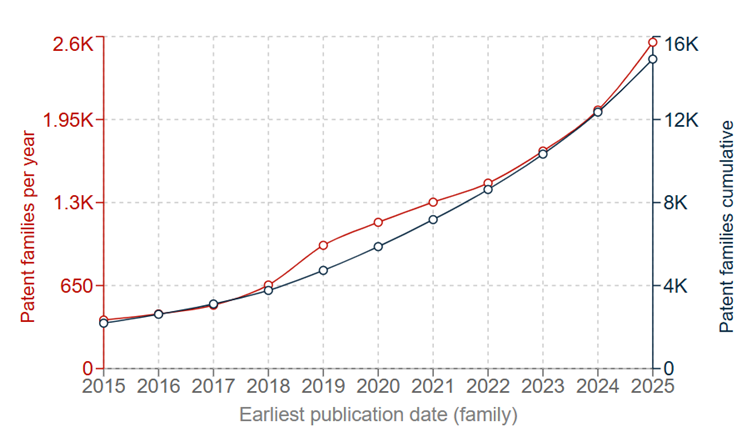
Growing demand for compact, safe, and high-capacity batteries across EVs and consumer electronics has seen solid state battery development start to approach manufacturing and early commercialisation. Correspondingly, the overall trend – both worldwide and at the EPO – is that of significant increases in filings. Although the technology is nowhere near as mature as general Li-ion batteries, and filings are currently only at a similar level to Li-ion batteries 15 years ago, patenting activity in solid state batteries is only likely to increase in the coming years.
Batteries and the clean energy transition
A crucial step to tackling climate change is moving away from fossil fuels and transitioning to net zero. To achieve this goal, we need to make a marked shift towards cleaner energy sources, such as solar and wind. However, there are obstacles which need to be overcome to ensure that these sources can provide sufficient power to fuel our ever-growing demand. Solar panels only generate electricity when the sun is shining. Wind turbines only generate electricity when the wind speeds are suitable. Therefore, this electricity must be stored and later released when supply falls or demand rises.
Innovation in battery technology is helping to solve this major challenge in the clean energy transition, providing a way to store energy and facilitating the widespread adoption of low-carbon electricity systems. Batteries are also essential in the electrification of transport which is another important measure for reducing greenhouse gas emissions.
Lithium-ion batteries currently play a major role in both electric vehicles and energy storage systems. Their relatively high energy density allows large amounts of energy to be stored in a compact space. On the other hand, sodium-ion batteries could be emerging as the holy grail of energy grids due to the greater availability of sodium. Although they store less energy per kilogram, this may not be of consequence for the storage of renewable electricity, and their relatively lower cost and reduced reliance on critical minerals could accelerate the clean energy transition. In terms of the electrification of vehicles, solid-state batteries may take us one step further. Whilst they are largely in a pre-commercial stage, it is suggested that they can offer a higher energy density, faster charging, improved safety and longer battery lifetimes. This could be revolutionary for vehicles like long-range passenger transport, heavy goods transport, or even aviatic and marine vehicles.
Patent strategy
Of course, there are far more possible battery technologies in development, and even more avenues for development, than have been discussed here. There undoubtedly remains a wealth of opportunity, across the entire field of battery development, for the discovery of the next transformative breakthrough.
However, as the data above indicates, there exists an extensive minefield of patent disclosures and patent rights. Is important to note that, despite the abundant prior art these patents represent, disclosures of broader subject-matter are not necessarily a bar to obtaining patent protection for further optimisations of that subject-matter. However, questions around freedom-to-operate would likely need to be answered. In such a busy field, navigating this maze of prior art and prior rights requires careful consideration and a comprehensive IP strategy.
We are delighted to announce that two of our Partners in our London office have been promoted.
Dani Kramer has been promoted to Senior Equity Partner and joins the Senior Equity Management Team, whilst Max Thoma has joined the Equity Partnership. These promotions have been made with immediate effect.
These promotions reflect our firm’s commitment to recognising and awarding the talent across our team and the valuable contributions made by its members.
Dani Kramer is appointed Senior Equity Partner
Dani works for a number of large corporations, drafting and prosecuting patent applications, and managing their international patent portfolios. He focuses on the fields of AI and machine learning, microprocessors, communication technologies, internet television, software, and electrical and electronic engineering. Dani is recommended in the latest edition of IAM Patent 1000, the three most recent editions of IAM Strategy 300 and multiple editions of The Legal 500.
Max Thoma is appointed Junior Equity Partner
Max has extensive experience in drafting and prosecuting patent applications, and handling opposition proceedings at the EPO, working across a variety of fields, in particular, computer-implemented (software) inventions and engineering-related fields. He enjoys supporting multinational businesses on major contentious work, as well as working closely with startup businesses through the process of protecting their innovations. He has been featured in multiple editions of Managing IP’s IP STARS directory which recognises IP practitioners.
Partner Martin MacLean, says, “These promotions demonstrate our dedication to career progression here at Mathys & Squire. On behalf of the whole firm, we congratulate Dani and Max on their ongoing hard work and the high-quality service which they deliver to our clients, and are excited to welcome them to the next stage of their time at Mathys & Squire. They will continue to be an immense asset to our company, as it grows and strengthens its leadership team.”