Join Mathys & Squire at London’s Tech Week start-up event – Project Kairos, a dedicated start-up programme which is aimed at connecting startups with industry and investment.
From 12th-14th June our intellectual property attorneys will be at the Excel Centre and ready to answer any questions about intellectual property protection, strategy and key insights to turn start-ups to success stories.
Managing Associate, Andy White, will also be taking part in a panel discussion on 14th June at 12:15. If you want to know more about “Getting your operational ship in shape” we will see you there!
For the full agenda and registration information click here.
Andrew is a European Patent Attorney, a chartered UK Patent Attorney and holds both a Master’s degree and a PhD in physics from the University of Bristol. During the course of his PhD, sponsored by GSK, Andrew gained valuable insights into the world of commercial R&D and published a number of papers, book chapters and spoke at numerous international conferences – a skill which he now uses to give presentations on IP to both students and clients.
Partners Anna Gregson, Mike Stott and Dani Kramer from intellectual property firm, Mathys and Squire, recently attended Agritech Israel 2018, Tel Aviv’s 20th International Agricultural Technology Exhibition on agricultural technologies, innovations and food processing. They outline their views below on the event itself and the growing importance of the agri-tech industry.
With the theme “agriculture in arid and semi-arid regions”, the conference was dedicated to the challenges and solutions facing these global regions with attendees sharing ideas on the advanced techniques aimed at increasing the productivity of agricultural industries.
Dani Kramer noted “it was fascinating meeting individuals from such a diverse variety of companies across the agri-tech sector and learning about how their innovative technologies have helped them to grow their businesses.”
Why focus on Agritech?
Anna Gregson explains “primary food production is the biggest industry in the world and ensuring the stability and integrity of national and international food supply chains is crucial. With ever increasing challenges to expand food production in a sustainable way whilst reducing environmental impact, new technology is key to addressing these challenges.”
Why Israel?
In view of its arid geography, Israel’s agriculture sector has by necessity been forced to the at the forefront of agri-tech innovation, particularly in the areas of irrigation, water reuse and the development of plants and agricultural products to maximise production in extreme weather conditions. Mike Stott added that Israel is also a hotbed of innovation and start-ups more generally. With a population of only 7 million, Israel attracts approximately $2 billion in venture capital funding each year – to give some perspective, this is about as much funding as both Germany and France attract combined. Plus it is second only to Silicon Valley in producing start-ups.
What were the key trends from the conference?
Israeli agri-tech innovation has allowed crop growers to cultivate barren regions by using them as greenhouses. Israeli innovators have been at the forefront of drip irrigation, which uses slow and balanced water supply to achieve exceptional growth and also water recycling and reuse.
Why is Mathys and Squire suited to work with Israeli companies?
Our combination of technical expertise, local knowledge and commercial focus enables us to deliver results for our clients whilst understanding the culture of Israeli businesses and the unique challenges facing the Israeli market. As a result, we have developed strong relationships with associate law firms in Israel, helping them provide expert advice to Israeli businesses seeking to establish a strong foothold in the European market.
If you have any questions about Israeli innovation or the agri-tech sector, please get in touch via one of the email addresses below.
Dani heads up our specialist Israel practice after spending years working with Israeli clients and attorney firms based in Israel. He works for a number of large corporations, drafting and prosecuting patent applications, and managing their international patent portfolios.
Mike has a first class master’s degree in chemistry from the University of York and has worked in the patent profession since 2008. He has been involved in the drafting and prosecution of patent applications in the UK, Europe, and many overseas jurisdictions, including the US.
Anna has a first class MA honours degree in natural sciences, specialising in pathology from the University of Cambridge and a PhD in biochemistry from the University of Manchester. Anna has a breadth of experience in the fields of biotechnology and life sciences.
We would be delighted if you would join us at The Varsity Hotel and Spa on Thursday 7th June.
Join the patent and trade mark teams for drinks and canapés on the roof terrace and enjoy panoramic views of Cambridge.
When: Thursday 7th June 2018
Time: 18.00 – 21.00
Where: Thompson’s Lane, CAMBRIDGE CB5 8AQ
Please click here to RSVP by 1st June to confirm your attendance and let us know if you have any dietary requirements. We look forward to seeing you!
Many will have noticed the recent decision by EU member states to endorse the European Commission’s proposal to completely ban all outdoor use of certain, widely-used neo-nicotinoid pesticides, which have been reported to have a detrimental effect on honeybee and wild bee populations. This has followed a decision in 2013 to only ban the use of such pesticides on flowering crops; those which are most likely to attract bees.
Whilst the UK was one of the member states to oppose the partial ban initially, Michael Gove, the Government’s Environment Secretary, has indicated that in the light of further evidence highlighted in a report by the UK Expert Committee on Pesticides (ECP), extending the ban as proposed by the Commission is something that the Environment Secretary now considers to be justified.
Whilst many will see the ban as a victory for conserving bee populations, which have historically served certain sectors of the food industry well with their pollination prowess, as well as for reducing the incidence of pesticide contamination in food products, others see the measures as overly cautious and serving to rewind years of development of the farmer’s armoury against pests which can blight crop production. This comes at a time when concerns over global food shortages are steadily growing as current projected food production trends fall well short of the projected demand of a global population expected to reach 9 billion by 2050.
Agri-Science was identified in 2014 as part of the UK Intellectual Property Office’s (IPO) “Eight Great Technologies” report as a robust and growing area for innovation in the UK.
It seems that now more than ever the gauntlet has been thrown down for Agri-Tech innovation to respond to the further challenges to maximising crop production.
Nevertheless, we have already had glimpses of the new technologies which might provide the answer, including the use of drones and robotics, farm management software packages, vertical farming, aquaponic farms for urban environments, gene-editing and biological pesticides, to name but a few.
Thus, although the decision to reign in the use of certain pesticides might make crop protection that bit more difficult in the short term, innovation in this area is a promising sign that there will be other new tools for the farmer to rely on to maximise crop protection sustainably in the future.
Mathys & Squire’s Agri-Tech team are working with a range of businesses at the cutting edge of farming and food production.
If you want to know more about this topic or any other Agri-Tech related area, please contact Mathys & Squire partner, Mike Stott on [email protected]
Mike has a first class master’s degree in chemistry from the University of York, and was awarded the university’s ‘ICI Prize’ for his performance in the final examinations. Mike has worked in the patent profession since 2008 and prior to that worked in the pharmaceutical industry. He has been involved in the drafting and prosecution of patent applications in the UK, Europe, and many overseas jurisdictions, including the US.
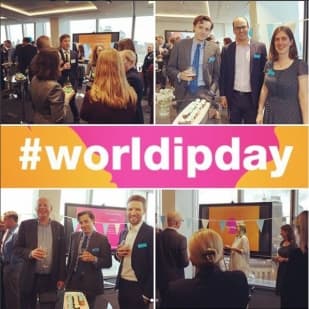
On Thursday 26th April we celebrated World Intellectual Property Day: ‘Powering Change: Women in innovation and creativity’.
In 2000, the World Intellectual Property Organisation (WIPO) designated 26 April as World Intellectual Property Day with the aim of increasing the general understanding of intellectual property. As such, the day provides a unique opportunity for those around the globe to consider and celebrate how innovation and intellectual property drives change and shapes our future.
We hosted a drinks reception at our head office in London in The Shard and were joined by innovators, start-ups, entrepreneurs and businesses in IP.
Mathys & Squire partner Caroline Warren lead the speeches, outlining why she chose to pursue a career in IP and engineering, whilst Wynne Willson Gottelier’s Director of Innovation, Whitney Conti, talked through her success story and her ongoing exploration into renewable energy and sustainability.
With events taking place around the world, the evening was one of many that celebrated the importance of IP and highlighted the diverse ideas and technologies that are in the making.
We look forward to celebrating again next year!
If you want to know more about IP in IT and Telecoms related areas, please contact Mathys & Squire partner, Caroline Warren on [email protected].
Caroline has a master’s degree in physics from the University of Oxford, with a specialisation in laser physics. Caroline manages large portfolios of applications for multinational organisations, including representing clients at hearings before the European Patent Office, but also enjoys advising small businesses on their IP strategy, both in the UK and internationally. She drafts and prosecutes patent applications in the fields of networking and communications technologies
The UK government used the occasion of World IP Day yesterday to ratify the Unitary Patent Agreement. The aim of this pan-European agreement is to bring into being the Unified Patent Court (UPC), which will unify patent enforcement and litigation across much of Europe and provide an opportunity for patent applicants to obtain a unitary European patent right.
UK ratification of the Agreement is a significant step forward for the project, which is expected to simplify and reduce the cost of the enforcement of patents throughout the EU and is widely supported by industry bodies and the legal profession. However, significant questions remain over whether the Agreement will actually come into force with a challenge to the legality of the system pending in the German courts and questions remaining over the effect of Brexit on the system. We can only wait to find out whether the next World IP Day will see us celebrating the launch of this new chapter in the world of patents.
If you have any questions about the UPC please contact Caroline Warren – [email protected]
Managing Associate Andrew White was featured in today’s Evening Standard highlighting the importance of intellectual property protection and management.
Andrew, who supports and advises a number of London’s start-ups across fields such as technology, manufacturing, engineering and IT, outlines that often intellectual property is an underused, if not an entirely forgotten about, aspect of a firm’s strategy. However when properly protected and commercialised, IP can turn a new business from zero to hero – or at the very least generate revenue and serve as a vital business development tool.
Click here to download the article or click here to read online.
If you have any questions about the article please email Andrew – [email protected].
Andrew White is a European Patent Attorney and a chartered UK Patent Attorney. Andrew has an active approach to engaging with London’s burgeoning start-up community. He regularly provides free support and advice to a number of start-up accelerators and incubators in the UK, discussing all aspects of IP including strategy, registered designs, agreements and licencing, as well as patents. Andrew has been commended by clients for his proactive approach and understanding of business strategy. He likes to develop long term relationships with clients and their technical teams to really understand where a business is going and how IP can be used as a tool to complement those drivers and help the business grow.
Happy Birthday to us!
We would be delighted if you could join our team and celebrate our turning 10 years old in Manchester on Thursday 21st June!
Drinks and nibbles will be hosted at 20 Stories so join us to raise a glass and have some birthday cake in the rooftop garden.
When: Thursday 21st June 2018
Time: 18.00 – 21.00
Where: 20 Stories, No 1 Spinningfields, 1 Hardman Square, Manchester, M3 3EB
Please click here to RSVP by 18th June to confirm your attendance and let us know if you have any dietary requirements.
On 28 March 2018, almost a year to the day since the UK submitted the notification of its intention to withdraw from the European Union, the European Commission published a Notice To Stakeholders regarding the consequences of the withdrawal for the 300,000 .eu domain names currently registered in the UK.
As of the withdrawal date, currently set at 30 March 2019, the UK will become a ‘third country’ and the following rules will apply for .eu domain names:
1. Eligibility
The following will no longer be eligible to register or renew .eu domain names
(i) undertakings and organisations that are established in the United Kingdom but not in the EU; and
(ii) natural persons who reside in the United Kingdom.
2. Revocation
The Registry for .eu domain names will be entitled to revoke domain names on its own initiative if a holder of a domain name no longer fulfils the general eligibility criteria.
3. Rights
Rights recognised or established in the United Kingdom, but not in the 27 Member States of the EU or by the Union can no longer be used as a basis for seeking the revocation of a domain name confusingly similar thereto.
If the above provisions are likely to affect you or your business, and you would like to explore the strategy your business should take, please do contact your Mathys & Squire Attorney.
Join us on Thursday 26th April to celebrate World Intellectual Property Day: ‘Powering Change: Women in innovation and creativity’
In 2000, the World Intellectual Property Organisation (WIPO) designated 26 April as World Intellectual Property Day.
The aim? To increase the general understanding of intellectual property.
World Intellectual Property Day is a unique opportunity for those around the globe to consider and celebrate how intellectual property and innovation drives change and shapes our future.
We will be hosting a drinks reception in our offices in the Shard.
When: Thursday April 26th 2018
Time: 18:00 – 21:00
Where: Mathys & Squire, The Shard, 32 London Bridge Street, SE1 9SG
For canapés, cocktails, cupcakes and more, click to RSVP by Friday 20th April.
For any enquiries, please email [email protected].