Research from Mathys & Squire on the number of patent applications for anti-drone devices has been featured in the article, “Trial by fire: ‘no training’ to prepare for reforms”, by The Times.
Partner Andrew White has also been featured in a number of publications, following his commentary on the growing demand for technology which defends against drones, as drones become a mainstream security challenge rather than just a niche concern. He notes that the conflict in the Gulf demonstrates a need for anti-drone measures which are not dependent on the use of million-dollar interceptor missiles and will push innovation towards non-traditional approaches.
Publications
- South China Morning Post
- Compare the Clouds
- The Daily Star
- ePlane AI
- The Star
- La Nouvelle Tribune
- Tech Round
- Unmanned airspace
- 24 News HD
- Macau Business
- Kompas.com
- Vietnam plus
Read the extended press release below.
- Number of applications rose by 27% to 126 in the year to March 2025, up from 99 the year before
- Drones have transformed modern warfare in Ukraine
- Conflict in the Gulf shows the limits of using pre-drone era expensive interceptor missiles
The number of patent applications for anti-drone (counter-UAV) technologies filed globally increased by 27% to 126 last year*, up from 99 the year before, according to new research from leading intellectual property (IP) law firm Mathys & Squire.
The sharp rise in patents filed reflects growing global demand for systems capable of disabling or neutralising drones, whose use has expanded rapidly.
The conflict in the Gulf shows the need for anti-drone measures that aren’t dependent on the use of million-dollar interceptor missiles. Meanwhile, incidents involving suspicious drone sightings in Europe and the US over the past year have raised questions about the vulnerability of both domestic civilian and defence infrastructure to drone attacks.
China dominated the global anti-drone patent landscape, filing 82 applications in the last year alone, far ahead of the US, which recorded just 22 new anti-drone patent submissions. China, the US and South Korea rank as the top three anti-drone patent filers globally.
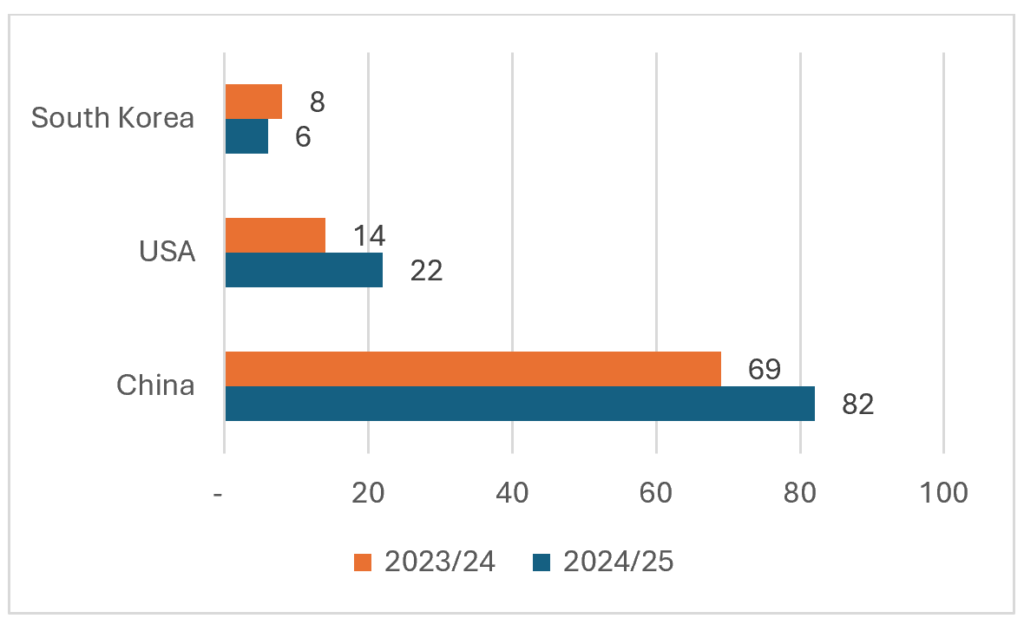
European filers appear to be lagging in anti-drone patent filings, despite the fact that since September, seven major European airports have faced drone-related disruptions, including major hubs such as Brussels and Munich.
Interference and jamming remain the most common area of innovation, recording 49 new patents last year. Signal interference technologies accounting for the largest share of new inventions. This reflects a growing focus on non-kinetic countermeasures designed to disrupt drone communications and navigation systems.
Following recent drone-related incidents – including the temporary suspension of operations in Copenhagen and Oslo airports – technologies that can rapidly disable or disrupt drones, such as signal interference, appear to be in increasing demand.
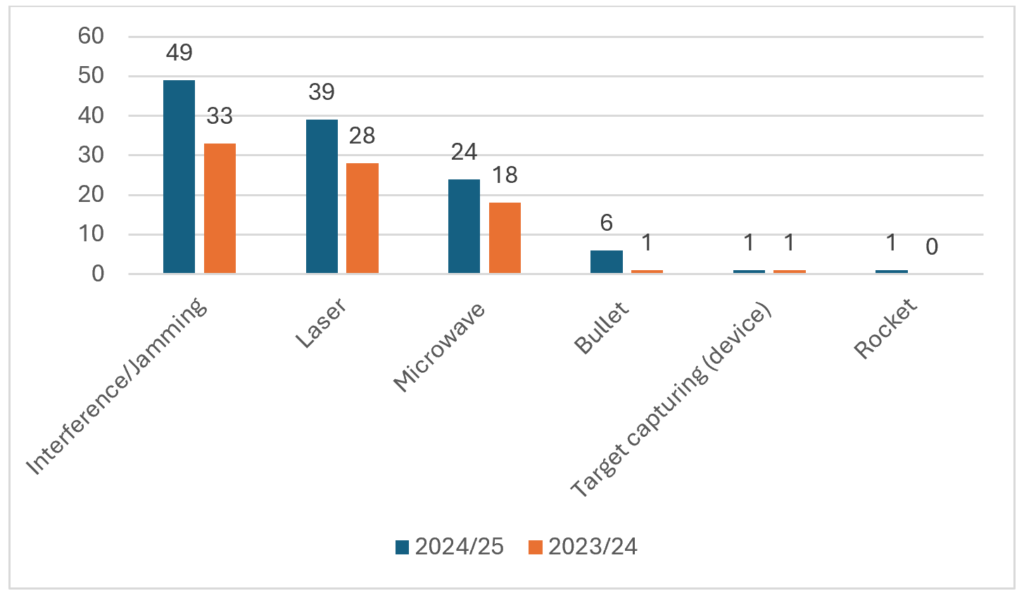
However, a notable shift is also underway toward next-generation counter-drone technologies. Laser-related inventions reached 39 in 2025, while microwave systems rose strongly to 24 patents, suggesting increasing interest in directed-energy approaches as part of future airspace security.
Andrew White, Partner at Mathys & Squire says: “Drones have shifted from being a niche concern to a mainstream security challenge and the rise in patent filings reflects that change. With drone disruptions affecting sensitive sites and infrastructure, organisations are racing to develop reliable countermeasures.”
He adds: “We’re also seeing innovation move beyond traditional approaches. Laser and microwave systems are gaining traction in the counter-drone market and this is likely just the beginning of a broader shift in how airspace threats are countered.”
Commercial and infrastructure protection use cases are also growing rapidly, with anti-drone technologies increasingly being developed for use in areas such as airports, prisons, energy infrastructure, ports and large public events.
*Research conducted with a year-end of March 31, 2025