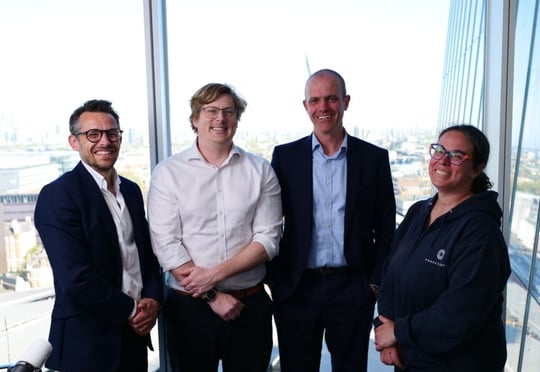
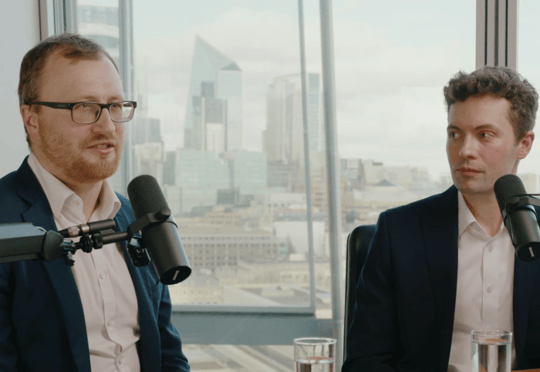
In “From Drones to Uncrewed Helicopters: Innovation in UK Defence Tech”, Justin Tooth talks to Andrew White about the recent developments in the UK defence industry, drawing on his experience as CEO of Certo Aerospace, a 100% UK-owned company generating 100% UK-held IP.
Defence is a crucial driver of innovation. It prompted Certo Aerospace’s seemingly random shift from a flying motorbike to Capstone UAS, an uncrewed helicopter. As software, robotics and automation have advanced in tandem over recent years, the impact on defence technology is materialising. Capstone occupies a unique position between drones and manned helicopters, able to carry significant loads as well as enter areas too dangerous for humans.
And behind Capstone? Intellectual property. For a R&D-heavy company like Certo Aerospace, IP is everything. Watch this episode to learn how they navigated the IP landscape with the help of Mathys & Squire and get a glimpse into the future of UK defence innovation.
You can listen to the episode on Spotify here.
Learn more about Certo Aerospace in our article here.
Read more about our services and expertise in aerospace here.
Episode summary
Topics discussed🎙️
- How Certo Aerospace evolved from a flying motorcycle company into a defence businesses developing Capstone.
- What differentiates Capstone from conventional drones and helicopters, in particular its coaxial configuration.
- The way needs in defence drive innovation in the aerospace industry, with technologies being developed for defence before moving to civil applications, and equally the way innovation in software and robotics drives advancements in defence.
- The strength of smaller UK defence companies, and the need to protect their IP and ensure that strategically important technology remains British-owned and controlled.
- How IP has been fundamental to Certo Aerospace’s ability to survive and attract investment, and the IP considerations for collaboration and licensing.
Key takeaways💡
- Defence can be a powerful catalyst for innovation: Demand in the defence industry is shaped by urgent operational requirements, accelerating innovation, as well as diminishing regulatory barriers.
- The future of aerospace is increasingly autonomous: Robotics, autonomy and software are opening up new possibilities for aircrafts; Capstone’s potential applications, for example, extend beyond conventional military drones, from logistics and casualty evacuation to agriculture and emergency services, performing tasks which are too dangerous or difficult for human pilots.
- The sector is still at an early stage: We can compare the current stage of larger drones to the stage of the automotive industry in 1901 – there is still enormous scope for experimentation and technological differentiation.
- IP is fundamental to an R&D company’s value: For Certo Aerospace, IP is not simply a legal consideration. Investors need confidence that the technology they are investing in is protected from copying or reverse engineering.
- IP strategy needs to account for collaboration: Building a modular aerospace platform means working with numerous third parties. Clearly defining foreground and background IP, ownership, licensing and what information can be shared is essential.
Notable quotes🔊
- “Currently only about 1% of the world’s helicopters are coaxial, and we firmly believe that that 1% will trend up to be 10% and then 20% in the future as the advantages of the coaxial configuration come through.”
- “Defence is very often the first user and the first driver of things in aeronautics, because air power is such a key advantage in the military and naval context, and defence departments are often driven by urgent operational requirements.”
- “Automation, robotics, the development of autonomy, the development of the software around being able to control systems without people driving them, and to do that over large distances, that’s been going on now for decades, but it’s only just really starting to impact the VTOL (Vertical Take-off and Landing) world”
- “There’s been an underspend in defence in this country that goes back for a generation, so we’re woefully underprepared and underequipped. If you can do that equipment and that capability development and projection at a lower cost using robotics, using machinery, using software, then we’ll get there quicker”
- “It’s natural for the investors to wonder what they’re really buying. Could what they’re investing in just get up and walk out the door? Could it be copied? Could it be reverse engineered? IP protection is absolutely critical to our ability to survive; we mustn’t run out of money and we mustn’t lose our IP – those are our two well-weather mandates.”