After years of anticipation, the FIFA Men’s World Cup 2026™ is under way in North America. Unsurprisingly, meticulous planning and preparation at an unprecedented scale has gone into staging what is widely seen as the biggest sports tournament of all time. Beyond the colossal stadiums and fan parks, football’s governing body FIFA (Fédération Internationale de Football Association) and its partners have prioritised innovation to enhance the experience for fans and players alike.
The football pitch has transformed into its own technological system. Cameras, sensors and AI merge seamlessly to generate a network of data to help referees officiate matches with more accuracy and transparency. To what degree these objectives are being met cannot be known for certain, but it is undoubtable that the implementation of these technologies has fundamentally altered the nature of ‘the beautiful game.’
The integration of data in sport, as well as advancements in the capabilities of sports equipment, have created a fast-growing category of intellectual property. In the last decade, the number of published patent applications worldwide related to sport grew at an annual compound rate of 7.6%. One in 6 published patent applications in sports technology were for football, highlighting the strategic importance placed on innovation by those involved in and running the sport. With large companies competing on a global level and innovating at a rapid pace, these major players recognise that securing intellectual property protection and enforcing those rights is vital.
In no place is this more apparent than at this year’s World Cup. Whilst our eyes are glued to the pitch, waiting to see who will score, we are also watching intellectual property in action.
Trionda™: The official World Cup ball
Across each venue, an array of complex technology works together to facilitate a smooth match and live global broadcasting. Take all this away and we are still left with the most foundational and yet one of the most innovative pieces of equipment in the game: the ball.
The official ball of the tournament, Trionda™ (“tri” meaning three and “onda” meaning wave in Spanish) is both a feat of engineering and a visual symbol. Every aspect of it has been carefully designed by Adidas™, the official ball supplier for the World Cup since 1970. Each tournament has seen new technological advancements and a unique design, both of which can be protected through intellectual property rights.
Form
The ball is constructed from four thermally bonded polyurethane panels, the lowest number of panels in a World Cup ball. The panels curve together, imitating the wave mentioned in the ball’s name, and join in a triangle, representing the union of the three host countries. The colours and details represent the host countries as well: red for Canada, green for Mexico and blue for the USA, and the ball is covered with almost invisible symbols: a maple leaf, an eagle and a star.
The unique structure of the football was registered as a design (DM/241148) in October 2024 under the International design registration (‘Hague’) system. This means the design can be protected in several key jurisdictions, including the UK, US and EU. Adidas™ filed a multi-part design application to pursue a broader overall scope of protection by displaying different elements in each design, such as the base pattern, the colours and the embossed symbols.

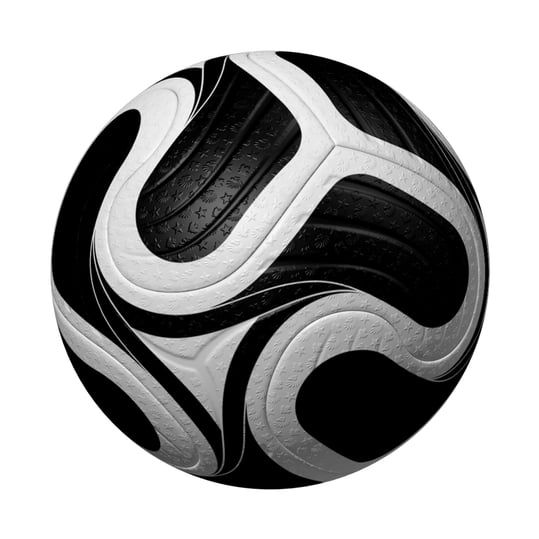
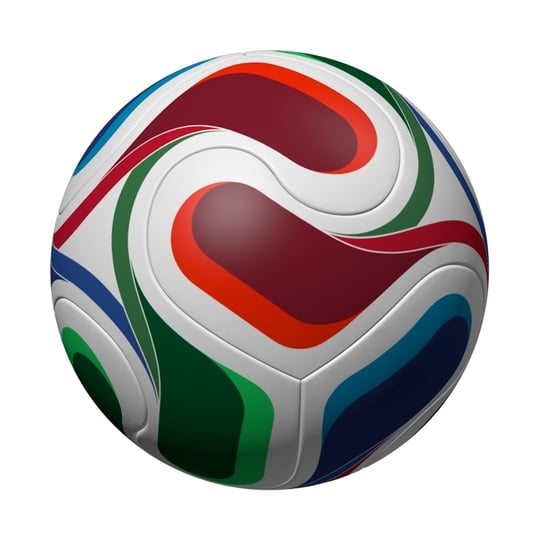
DM/241148 – WIPO Global Design Database
Function
Beyond aesthetics and branding, the design also serves a functional purpose. The embossed pattern, for example, enhances grip in wet conditions, whilst the intentionally deep seams optimise flight stability. This could well be the reason why the ball has behaved unexpectedly in the air and has caught goalkeepers off-guard in the early stages of the tournament, as noted by several commentators and analysts.
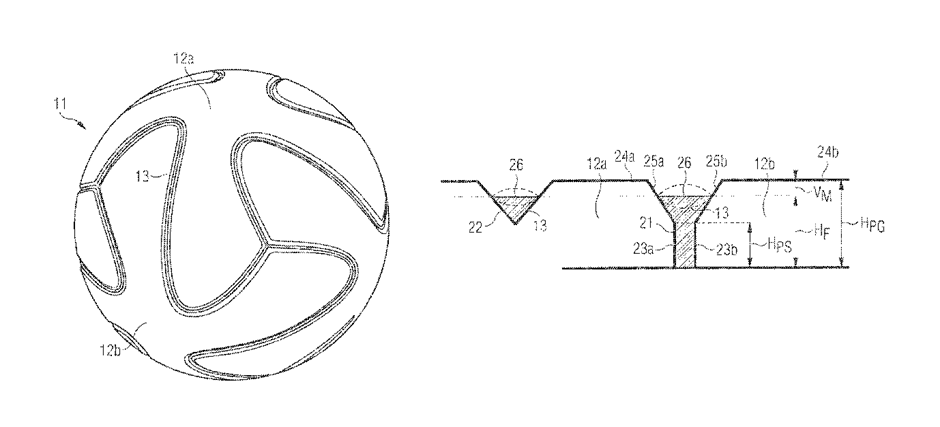
A key requirement for obtaining patent protection is that the invention provides a solution to a technical problem. Features of a ball which have been specifically developed for improved performance, such as better grip or faster flight, would seemingly satisfy this condition. Adidas™ owns a patent (US10376750B2) which references the way a ball with four panels is constructed to have grooves between the panels so it is more aerodynamic. The description of their US patent No. 8529386B2 discusses how a lower number of seams allows for players to control the ball more consistently, but large panels can result in “unintended or unpredictable flutter movements.” The patent’s claims refer to the addition of “pseudo-seams” between real seams which do not deform the ball but nevertheless stabilise the flight of the ball.
The new digital game
During the 2022 FIFA World Cup™, Adidas introduced the world’s first smart ball: designed to enhance refereeing performance. The technology has been upgraded for this year’s edition and has seen an expanded role in helping the on-site and Video Assistant Referee (VAR) to make quicker and more accurate decisions during matches.
Inside the ball
The ball contains an ultra-lightweight Inertial Measurement Unit motion sensor to facilitate Semi-Automated Offside detection. Careful innovation ensures that the addition of the sensor does not negatively impact the ball’s performance and that the internal structure survives the unique conditions of being inside an active ball. For example, in previous iterations, the sensor was suspended in the middle of the ball, but this caused issues on account of continuous, high-velocity impacts which could weaken the tension of the wires holding it in place. In this year’s ball, the sensor is mounted inside a layer within one of the panels instead.
And so, the four-panel layout takes on a third role beyond aesthetics and aerodynamics: enabling the integration of the sensor. The geometric symmetry, combined with identical counterweights in the other panels, preserves the ball’s centre of mass, so its flight is not affected. The low number of panels also allows for as much space as possible to accommodate electric hardware between seams.
Another major consideration is how to ensure the sensor does not lose power in the middle of a game. This is solved by a lightweight internal battery which is chargeable via localised secondary coils. There is no external port which would disrupt the ball’s smooth shell and a ball charged for 90 minutes lasts 6 hours.
US Patent No. 12533561B2, filed in 2024, seems to be a precursor to the fully optimised smart ball, referencing “a method for monitoring the motion of a sport ball impacted during the course of an athletic activity” involving “a portable electronic device wirelessly receiving motion data from the sport ball, and the portable electronic device determining a point of impact based on the motion data.” Further patent specifications related to the sensor appear to not be publicly available yet.
Outside the ball
Known as ‘connected ball technology,’ the data is captured 500 times per second and is transmitted to the VAR system. This is 10 times faster than the typical frame speed of video technology used in football. Over one match, 10 to 15 balls are used; when a ball is thrown in, the system registers the kinetic impact, instantly and automatically transferring the role of active data tracking to the new ball’s hardware ID.
The data from the ball is integrated with information from cameras mounted beneath the stadium roof which track up to 29 data points on each player and read the bodies 50 times per second. All this data is processed by AI, generating automated alerts for the VARs and recreating the entire match in 3D with digital avatars for each player.
The complex fusion of hardware, software and AI in the ball as well as off-the-pitch equipment makes the picture even more interesting for intellectual property strategy. A layered strategy is necessary to ensure all aspects of a technological system are protected by separate patents.
In addition, the innovation at the World Cup highlights the importance of partnerships and IP licensing. Strategic partnerships enable the development of complex technology, whilst IP licensing is a smart way for businesses to monopolise their assets or gain access to other markets. For example, Adidas™ has partnered with German technology company, Kinexon™, which specialises in ultra-wideband tracking technology for sports applications, for the sensor technology. Adidas™ owns the patent covering the core integration of the sensor, whilst Kinexon™ contributes the software technology, possessing expertise in areas such as ultra-wideband localisation, real-time positioning systems and the synchronisation of multiple wireless sensors. There is real value in protecting your innovation, even if you are not a manufacturer yourself, as it can be very lucrative to licence out your technology to a bigger player. And this is only made possible by having a robust IP strategy.
The jury is still out on whether the latest technology demystifies refereeing decisions for the average fan. Pursuit of this goal, however, has certainly highlighted the role of intellectual property in the shaping the future of our game.